Plush Toy Manufacturing Insights & Blog
Stay updated with technical guides, soft toy production processes, OEM trends, and safety standards from KID IN U.
2026 Top Collectible Plush Toys for Global Buyers
Table of Contents
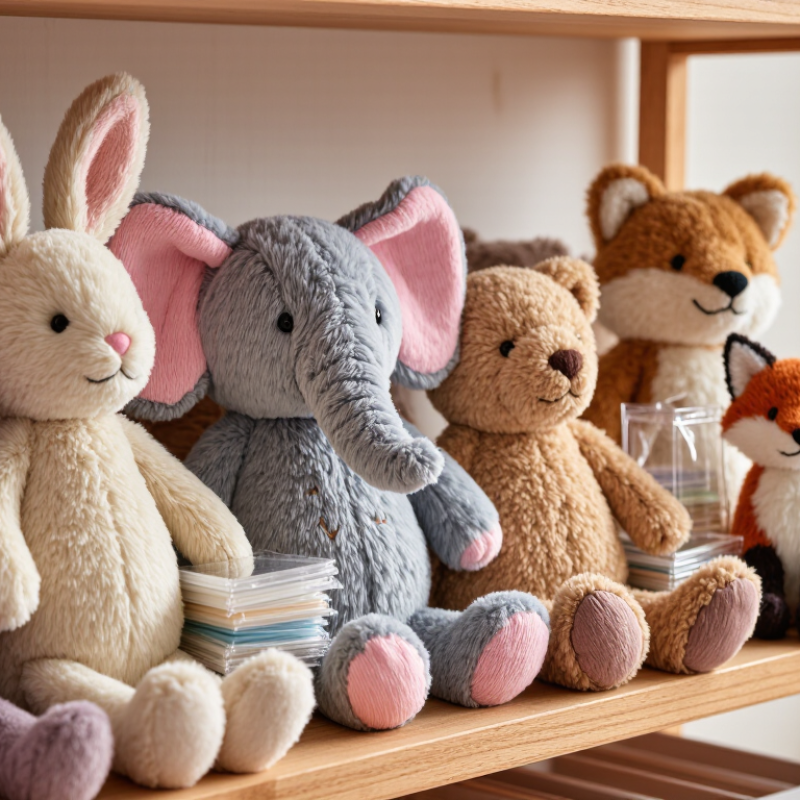
The 2026 market for Collectible plush toys is becoming more thoughtful, varied, and globally connected. Buyers now look beyond cute faces and soft fabric. They examine character design, stitching quality, production history, and long-term appeal. A plush toy displayed on a shelf may also carry cultural meaning, artistic value, or memories of a favorite story.
This guide highlights leading collectible plush toys for international buyers. Each selection deserves attention for its materials, craftsmanship, design originality, and availability. We consider embroidered details, reinforced seams, recycled fibers, protective packaging, and clear product information. Reliable sellers should provide age guidance, care instructions, origin details, and evidence of appropriate safety testing. These details matter when products cross borders. They can also prevent disappointment after delivery.
Popularity remains difficult to measure. Social media attention can rise quickly, then disappear. Some limited editions become valuable, while others remain meaningful only to a small community. That uncertainty should not be ignored. Our assessment combines market observation, collector experience, supplier transparency, and practical ownership concerns. It is not a promise of future value.
Small details matter.
A well-shaped ear, clean stitching, or balanced filling can reveal careful production. Meanwhile, crushed packaging, loose threads, or unclear labeling may signal avoidable risks. Global buyers should compare prices, shipping conditions, return policies, and regional requirements before purchasing. The strongest choices are not always the rarest or most expensive. Sometimes, a modest plush with excellent construction earns the most lasting affection.
What Makes Collectible Plush Toys Popular in 2026
2026 Top Collectible Plush Toys for Global Buyers
What Makes Collectible Plush Toys Popular in 2026
Collectible plush toys are becoming emotional objects, not simple children’s products. Grand View Research estimated the global plush toy market at about $7.3 billion in 2023, with continued growth expected through 2030. Their appeal comes from softness, character design, and display value. A small plush toy can sit beside a laptop, travel in a tote bag, or decorate a bedroom shelf.
Scarcity also matters. Numbered releases, seasonal colors, and removable accessories create a stronger sense of ownership. Circana reported that kidult consumers represented about 25% of U.S. toy sales in 2023. This group often buys for personal enjoyment, nostalgia, and social connection. Online videos and collector communities make product discovery faster across borders. Yet popularity is not guaranteed. Some limited designs feel artificial, especially when quality does not match the price.
Buyers in 2026 are paying closer attention to fabric safety, stitching, filling, packaging, and care instructions. The Toy Association’s industry research continues to highlight adult participation and emotional play as important market forces. Collectors also expect clear product dimensions and reliable delivery information. Sustainable materials attract interest, but vague environmental claims can weaken trust. The strongest products combine a memorable face, durable construction, and a story buyers can understand quickly. Not every cute toy becomes collectible. That remains an uncomfortable truth.
Key Types of Collectible Plush Toys for Global Buyers
2026 Top Collectible Plush Toys for Global Buyers
Key Types of Collectible Plush Toys for Global Buyers
Collectible plush toys now serve different tastes, budgets, and display habits. Character-inspired plush remains popular because familiar faces create emotional value. Animal plush offers wider appeal, from realistic forest creatures to soft farm animals. Fantasy designs, including dragons and gentle monsters, attract buyers seeking imaginative displays. Mini plush suits collectors with limited shelf space. Seasonal and limited-edition pieces can feel special, but availability may change quickly. Handmade plush often shows visible stitching or small variations. That detail can increase charm, although it may reduce uniformity.
Tips: Compare size, fabric, filling, and care instructions before ordering. Request clear photos of seams, labels, and packaging. Check whether the seller provides material details and age guidance. For international delivery, confirm dimensions, shipping costs, customs requirements, and return terms. These steps prevent expensive surprises.
Quality matters more than rarity alone. Experienced buyers inspect embroidered features, secure seams, and balanced stuffing. Soft polyester fibers are common, while recycled materials may appeal to sustainability-minded customers. Reliable sellers should provide consistent product specifications and safety documentation for the destination market. I once focused too heavily on unusual design and overlooked storage needs. That was a poor decision. A collectible should fit the buyer’s space, handling habits, and maintenance ability. Some plush toys look perfect online but feel less durable in person. Independent reviews and detailed measurements offer useful evidence before purchase.
2026 Top Collectible Plush Toys for Global Buyers
Key types of collectible plush toys ranked by typical global buyer appeal.
Character plush, animal plush, and mini collectible plush are strong options for international buyers because they combine recognizable designs, easy shipping, repeat-purchase potential, and broad age appeal. The index uses 100 as the highest comparative buyer-interest level within this category set.
Materials, Craftsmanship, and Safety Standards
For global buyers, collectible plush toys deserve more than attractive photography. Materials shape comfort, durability, and safety. Soft polyester fibers should feel even, without hard clumps or sharp residue. Outer fabric needs consistent stitching and stable color after washing. Embroidered features are generally safer than small attached parts, especially for younger users. I inspect seams by gently pulling them, then check openings near the neck, ears, and limbs. Tiny gaps can become serious weak points.
Craftsmanship appears in quiet details. A well-balanced toy sits upright and keeps its shape after repeated squeezing. Thread ends should be trimmed, not hidden under loose folds. I also look for clean embroidery, firm stuffing, and labels that remain readable. One inspection method is not enough. A sample may pass visually while failing after abrasion or washing. That limitation deserves honest attention.
Reliable suppliers should provide age grading, material declarations, batch records, and independent test reports. Depending on the destination, buyers may request evidence aligned with standards such as EN 71, ASTM F963, or other applicable consumer-product rules. Testing should address mechanical strength, flammability, and restricted substances. Packaging must protect the toy without creating unnecessary hazards. I have learned that paperwork can look complete yet lack traceable dates or sample numbers. Ask specific questions. Recheck production samples. Safety is a process, not a decorative claim.
2026 Top Collectible Plush Toys for Global Buyers - Materials, Craftsmanship, and Safety Standards
| Plush Toy Type | Typical Size | Common Outer Materials | Filling Materials | Craftsmanship Features | Key Safety Considerations | Relevant Safety Frameworks | Recommended Quality Checks | Suitable Buyer Segments |
|---|---|---|---|---|---|---|---|---|
| Classic Animal Plush | 18–30 cm | Polyester plush, cotton fabric, embroidered details | Polyester fiberfill | Even pile direction, symmetrical facial features, reinforced seams, neat embroidery | Secure eyes and nose; no accessible small parts for products intended for children under 3 years | EN 71, ASTM F963, ISO 8124, applicable chemical restrictions | Seam and attachment strength, flammability, accessible component, physical and mechanical testing | Gift shops, children’s retailers, museums, educational stores |
| Mini Collectible Plush | 8–15 cm | Short-pile polyester, microfiber, embroidered polyester thread | Fine polyester fiberfill or recycled polyester fiberfill | Compact pattern construction, small-scale embroidery, concealed stitching, balanced stuffing | Higher risk of detachable parts because of small size; age grading and warning labels must be accurate | ASTM F963, EN 71, ISO 8124, regional labeling requirements | Small-parts assessment, pull testing, seam inspection, colorfastness and chemical screening | Collectors, capsule-toy retailers, event shops, online gift stores |
| Large Hugging Plush | 45–90 cm | Long-pile polyester, velour, plush fleece | High-loft polyester fiberfill | Load-bearing seam reinforcement, uniform filling density, durable handles where applicable | Fiber shedding, flammability, seam opening, compression recovery and hygiene during storage | EN 71, ASTM F963, ISO 8124, applicable textile and chemical regulations | Compression testing, seam strength, flammability, surface fiber shedding and odor inspection | Home décor retailers, family gift channels, seasonal promotions |
| Articulated Collectible Plush | 20–35 cm | Polyester plush, cotton canvas, felt or faux suede accents | Polyester fiberfill with internal fabric supports | Positionable limbs, clean joint finishing, reinforced attachment points, precise pattern matching | Joint components must remain secure; exposed wires, magnets and rigid inserts require special assessment | EN 71, ASTM F963, ISO 8124, applicable magnetic and chemical safety requirements | Joint torque, pull strength, sharp-point inspection, magnet security and durability testing | Adult collectors, specialty retailers, display-oriented buyers |
| Eco-Material Plush | 18–35 cm | Recycled polyester plush, organic cotton, linen blends | Recycled polyester or plant-based fiberfill where technically suitable | Low-shed fabric, traceable material documentation, durable stitching and simplified trim design | Material claims must be supported by documentation; dyes, coatings and finishes require chemical evaluation | EN 71, ASTM F963, ISO 8124, REACH-related chemical restrictions where applicable | Fiber-content verification, restricted-substance testing, colorfastness, seam strength and odor checks | Sustainability-focused retailers, eco-conscious consumers, educational institutions |
| Sound or Light-Up Plush | 20–35 cm | Polyester plush with cotton or polyester lining | Polyester fiberfill surrounding an enclosed electronic module | Protected battery compartment, insulated wiring, secure module housing and washable-component separation | Button batteries require secure compartments; overheating, battery access and sound level must be assessed | EN 71, ASTM F963, ISO 8124, applicable electrical and battery safety requirements | Battery-compartment security, electrical safety, sound-level measurement, drop testing and wash-care validation | Interactive gift retailers, family channels, seasonal and promotional programs |
| Plush Keychain or Bag Charm | 7–14 cm | Short-pile polyester, felt, cotton twill | Polyester fiberfill | Reinforced webbing loop, secure metal or plastic clasp, compact seams and abrasion-resistant decoration | Small parts, sharp edges, metal coating, loop strength and potential entanglement concerns | Applicable toy safety standards, chemical restrictions and general product-safety rules | Clasp pull testing, abrasion testing, sharp-edge inspection, coating assessment and small-parts review | Fashion accessories, travel retail, event merchandise, collector communities |
| Seasonal or Holiday Plush | 15–40 cm | Polyester plush, felt, printed cotton and decorative ribbons | Polyester fiberfill | Consistent seasonal color matching, secure decorative elements and reinforced hanging loops | Ribbons, bells, sequins and ornaments may create detachable-part or sharp-edge risks | EN 71, ASTM F963, ISO 8124 and destination-market labeling requirements | Attachment strength, flammability, sharp-edge inspection, colorfastness and packaging review | Seasonal retailers, gift shops, department stores, festive display buyers |
Note: Applicable requirements depend on the destination market, intended age grade, product features and import classification. Safety standards should be verified through current official regulations and accredited laboratory testing before market release.
How to Evaluate Authenticity, Quality, and Value
2026 Top Collectible Plush Toys for Global Buyers
Authenticity begins with evidence, not excitement. Ask for clear photos of labels, stitching, tags, packaging, and any production markings. Compare these details with trusted collector databases, manufacturer records, or established marketplace guides. A genuine item usually shows consistent seams and carefully printed information. However, small factory variations can exist. Do not reject an item too quickly.
Quality appears under close inspection. Check whether the fabric feels even and resilient. Look for loose threads, uneven stuffing, stains, fading, or strong chemical odors. Examine the eyes, embroidery, and attachment points. These details often reveal careless storage or poor repairs. Request exact measurements, since displayed images can distort size. I have previously overlooked flattened filling because the photos looked attractive. That mistake changed my view of “excellent condition.”
Tips: Save every photo and message. Confirm the seller’s return terms before paying. Ask about storage, smoke exposure, moisture, and repairs. For international purchases, calculate shipping, taxes, and permitted import requirements. Value depends on more than scarcity. Condition, verified history, edition size, packaging, and current demand all matter. A low price may signal damage or uncertain origin. A high price may reflect hype rather than lasting interest. Compare several completed sales, not only active listings. Leave room for doubt. Collecting is personal, and resale value is never guaranteed.
Global Buying Channels, Pricing, and Import Considerations
2026 Top Collectible Plush Toys for Global Buyers
Global buying channels are widening, but price discipline matters more. Circana reported a 7% decline in global toy sales during 2023, making inventory risk harder to ignore. Buyers now compare direct factories, sourcing agents, B2B marketplaces, trade fairs, and regional distributors. Direct sourcing may lower unit prices, yet smaller orders often bring higher minimum quantities and slower quality control. Small details matter.
A practical costing sheet should include the factory price, sampling, inspection, freight, insurance, duty, testing, storage, and platform fees. For example, a plush toy quoted at 6 US dollars can reach 9 to 11 dollars after logistics and compliance costs. Grand View Research has projected continued growth in the global stuffed-toy market, but forecasts are not purchase guarantees. Demand can change before a container arrives. That is easy to underestimate.
Import checks should cover fiber content, filling materials, loose parts, washable labels, packaging warnings, and age grading. Buyers should confirm the correct HS classification and destination-market testing rules before payment. Requirements differ across the United States, European Union, United Kingdom, and other regions. Keep test reports, invoices, material declarations, and inspection photographs together. I would also request a production sample from every major batch. One honest weakness remains: online photos rarely reveal stitching tension or unpleasant odors. Physical inspection is slower, but it prevents expensive surprises.
FAQS
They offer softness, nostalgia, character, and display value. A small plush can sit beside a laptop or travel in a tote bag. Not every cute design becomes collectible.
Limited colors, numbered releases, and removable accessories can increase ownership appeal. A clear story also helps buyers remember the design. Scarcity alone is not enough.
Children, adult collectors, and nostalgia-driven buyers all participate. Many adults purchase them for comfort, personal decoration, or social connection. Some buyers simply enjoy the texture.
Check for even fabric, secure stitching, firm stuffing, and stable colors. Look closely at seams around the neck, ears, and limbs. Tiny gaps matter.
Request age guidance, material information, batch records, and independent testing documents. Testing should consider small parts, flammability, mechanical strength, and restricted substances. Paperwork can still be incomplete.
A well-made toy keeps its shape after repeated squeezing. Embroidery should look clean, while thread ends should be trimmed. The toy should sit upright without collapsing.
Request detailed photos of labels, tags, seams, packaging, and production markings. Inspect for loose threads, stains, fading, odors, repairs, or flattened filling. Photos can mislead.
Compare completed sales, not only current listings. Consider condition, edition size, packaging, verified history, shipping, taxes, and demand. A high price may reflect temporary excitement. Resale value is never guaranteed.
Conclusion
Collectible plush toys are becoming increasingly popular in 2026 because they combine comfort, creativity, nostalgia, and social appeal. Global buyers can choose from character-inspired figures, limited-edition designs, miniature plush accessories, seasonal collections, and artist-created toys. Their value often depends on distinctive design, rarity, emotional connection, presentation, and long-term collectibility.
This guide explains how to assess materials, stitching, filling, softness, color quality, packaging, and age-appropriate safety features. It also highlights practical ways to evaluate authenticity, condition, craftsmanship, and pricing before making a purchase. For international buyers, understanding wholesale platforms, specialty retailers, online marketplaces, shipping costs, currency differences, customs procedures, labeling requirements, and import policies is equally important. By comparing product details, seller reliability, certifications, and total landed costs, buyers can make informed decisions and build collections that offer both personal enjoyment and lasting value.

Blog Tags: