Plush Toy Manufacturing Insights & Blog
Stay updated with technical guides, soft toy production processes, OEM trends, and safety standards from KID IN U.
How to Choose Plush Toy Prototyping Services in 2026?
Table of Contents
- Define Your Plush Toy Concept and Prototyping Requirements
- Evaluate Service Providers’ Design and Manufacturing Capabilities
- Compare Materials, Safety Standards, and Customization Options
- Review Prototyping Costs, Timelines, Revisions, and Communication
- Select a Reliable Plush Toy Prototyping Partner for 2026
- FAQS
- Conclusion
- Related Posts
Choosing Plush toy prototyping services in 2026 requires more than comparing sample prices. A successful prototype must show softness, shape, stitching, colors, safety details, and production limits. It should feel convincing in a child’s hands, not only look attractive on a screen. The right partner can turn a sketch into a practical product while protecting its original character.
Toy-industry consultant Richard Gottlieb has often stressed, “A toy prototype should make the idea tangible before production begins.” That principle matters when reviewing factories, independent studios, and full-service development teams. Ask who creates the pattern, who selects fabrics, and who checks stitching strength. Request a physical sample, not only digital renderings. Examine the seams around ears, paws, and embroidered facial features. Small weaknesses become expensive problems later.
Experience matters here.
Strong Plush toy prototyping services should explain their workflow clearly. They should discuss revisions, material sourcing, sample ownership, communication, and realistic timelines. A reliable provider will also identify uncomfortable issues, such as fabric shortages, uneven stuffing, or colors that change under factory lighting. That honesty is valuable. Perfect promises can be a warning sign.
This guide compares practical selection criteria for 2026. It considers craftsmanship, technical knowledge, communication quality, ethical production awareness, and total development cost. Some recommendations may not suit every brand. That is the point. A premium collector plush and a washable children’s toy need different decisions. Reflect carefully before choosing.
Define Your Plush Toy Concept and Prototyping Requirements
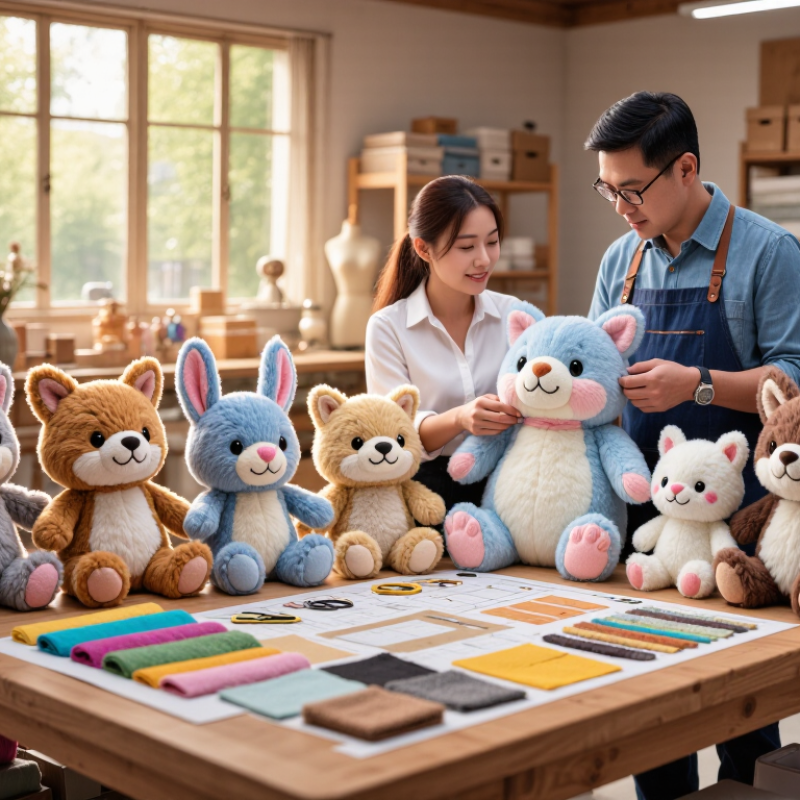
Before comparing plush toy prototyping services in 2026, define the toy itself. Write down its purpose, target age, approximate size, posture, colors, and personality. A sketch is useful, but it cannot show every construction problem.
Describe the fabric, filling, embroidery, accessories, and facial details. For example, specify a 25-centimeter toy with short-pile fabric, embroidered eyes, and soft polyester filling. Note whether it must sit upright, survive repeated handling, or fit inside retail packaging. Include safety expectations for seams, small parts, sharp components, and washable materials. These details help a prototype team quote accurately and recommend suitable processes.
Ask each service provider what the prototype includes. Confirm pattern development, material sourcing, sample revisions, measurements, and production-ready files. Request close-up photos of previous samples and ask how they record changes.
A reliable team should explain lead times, testing documents, ownership of artwork, and communication steps in writing. I once treated the first sample as a final answer, which was a mistake. The head looked oversized after stuffing, and the embroidery sat too close to the seam. Allow room for correction. Send a measurement chart, reference images, and clear notes about acceptable differences. Avoid vague requests such as “make it cuter.” Use measurable instructions, while accepting that handmade samples may show slight variations. That balance makes the chosen prototyping service easier to evaluate and more dependable.
Evaluate Service Providers’ Design and Manufacturing Capabilities
How to Choose Plush Toy Prototyping Services in 2026?
Evaluate a provider’s design and manufacturing capabilities before discussing price. A skilled team should turn a rough sketch into clear pattern pieces, fabric choices, and dimensional drawings. Ask how they handle curved seams, embroidered details, stuffing density, and movable parts. Their answers reveal practical experience. Ask for evidence.
Request photos of prototypes at different development stages. A reliable provider should explain revisions, material substitutions, and production limits without hiding weaknesses. Check whether the sample matches the approved measurements, facial placement, texture, and color references. Samples reveal more. A soft toy may look charming on screen but feel unbalanced in your hands.
Manufacturing capability matters beyond one attractive prototype. Review the team’s cutting accuracy, stitching consistency, stuffing process, and finishing inspection. Ask how they control loose threads, uneven ears, weak seams, and distorted shapes during larger production runs. Confirm that materials and components can meet applicable toy safety requirements in your target market. Documentation should be specific, current, and easy to verify.
Communication also deserves careful testing. Send one detailed design question and observe the response time and clarity. Vague promises can become expensive revisions later. I would also request a small trial sample before approving a full run. It may slow the schedule, but it exposes hidden problems early. No provider is perfect, and my own specifications may be incomplete. Good partners identify those gaps instead of simply agreeing.
Compare Materials, Safety Standards, and Customization Options
Choosing a plush toy prototyping service in 2026 requires more than reviewing attractive sample photos. Material selection affects comfort, durability, cost, and testing results. Ask whether the service offers recycled polyester, organic cotton, or low-shedding fabrics. Request fabric swatches before approving the design.
Look closely at seams, embroidery, filling, and attachment points. A soft toy for young children needs secure features and age-appropriate construction. Confirm testing plans for applicable standards, such as EN 71, ASTM F963, or ISO 8124. Requirements differ by market, so reliable suppliers should provide traceable test reports and explain laboratory methods. Vague promises are a warning sign.
Customization can include fabric color, facial details, clothing, sound components, packaging, and woven labels. Check how many revisions the service allows. Ask for a physical prototype, not only a digital rendering. Small changes matter. A nose can look oversized after stuffing, while a pastel fabric may lose contrast under normal lighting.
In my experience, the first sample is rarely perfect. That is useful. It exposes weak seams, uneven stuffing, or uncomfortable textures before production. Still, I once underestimated packaging space and had to adjust the pattern late. Leave room for corrections, and record every approved material and measurement. A skilled prototyping team should welcome these questions, even when they slow the schedule.
How to Choose Plush Toy Prototyping Services in 2026? – Compare Materials, Safety Standards, and Customization Options
| Evaluation Dimension | Option / Requirement | Verified Facts and Typical Characteristics | Best Use | Questions to Ask the Prototyping Service |
|---|---|---|---|---|
| Outer Fabric | Polyester plush or minky fabric | Common synthetic pile fabrics with good color consistency, abrasion resistance, and shape retention. The pile length and density strongly affect softness and appearance. | Most character toys, soft animals, and high-volume production concepts | What are the fabric composition, pile height, fabric weight, colorfastness results, and available test reports? |
| Outer Fabric | Cotton or organic cotton | Natural-fiber fabric with a different hand feel from polyester. Organic claims should be supported by certification covering the applicable fiber and supply chain. | Natural-style toys, embroidered dolls, and products marketed around plant-based materials | Can you provide fiber-content documentation, shrinkage data, dye safety information, and certification scope? |
| Filling | Polyester fiberfill | Widely used synthetic stuffing that is lightweight and washable when the complete toy design supports washing. Recycled content may be specified, but the percentage should be documented. | General plush toys requiring consistent loft and predictable production results | Is the filling virgin or recycled polyester? How is fill weight controlled, and can the toy pass compression and seam-strength checks? |
| Filling | Natural filling such as wool or plant fiber | Can provide a distinctive material story, but moisture management, fiber migration, allergens, odor, and cleaning instructions require additional consideration. | Specialty, eco-positioned, or sensory products with clearly defined care instructions | What controls prevent contamination, odor, clumping, fiber leakage, and inconsistent filling density? |
| Eyes and Nose | Embroidery | Eliminates separate hard eye or nose components and can reduce small-part concerns. Stitch density, thread security, and placement still need inspection. | Infant-oriented designs and toys where a soft, integrated face is preferred | Can you provide embroidery pull-test results, thread specifications, and close-up samples of the facial details? |
| Eyes and Nose | Plastic safety eyes or molded components | Provides a glossy or three-dimensional appearance, but components must be securely attached and evaluated for small-parts and mechanical hazards based on the target age. | Collectible, character-based, and older-child products | What attachment method is used? Will the finished toy undergo torque, tension, impact, and drop testing? |
| Customization | Shape and pattern engineering | A production-ready pattern should define seam allowances, fabric direction, turning points, stuffing openings, and component placement. Complex 3D forms may require several sample revisions. | Original characters, licensed-style concepts, and unusual silhouettes | Are digital pattern files, graded sizes, technical drawings, and revision records included in the deliverables? |
| Customization | Color and surface details | Options may include embroidery, printed fabric, appliqué, woven labels, ribbons, and contrasting fabrics. Each added detail introduces additional attachment, durability, and colorfastness considerations. | Brand characters, educational toys, promotional designs, and multi-color products | How are colors matched, and which decorations are included in the safety and durability testing plan? |
| Safety Standard | United States: CPSIA and applicable toy requirements | The Consumer Product Safety Improvement Act includes requirements relevant to children’s products, including limits and testing obligations for substances such as lead and certain phthalates. The applicable age grade and product construction determine the test plan. | Products intended for the United States market | Can you arrange testing through an appropriately accredited laboratory and provide component-level and finished-product reports? |
| Safety Standard | United States: ASTM F963 | ASTM F963 is the U.S. toy safety specification referenced in federal toy safety requirements. Relevant areas can include mechanical and physical properties, flammability, chemistry, sound, and labeling. | Plush toys sold or intended to be sold in the United States | Which ASTM F963 sections apply to this design and age grade, and will changes to materials trigger retesting? |
| Safety Standard | European Union: EN 71 | The EN 71 series covers toy safety topics including mechanical and physical properties, flammability, and migration of certain elements. The relevant parts depend on the product and intended use. | Plush toys intended for the European market | Will the technical file include the applicable EN 71 test reports, risk assessment, labeling, and conformity documentation? |
| Safety Standard | International: ISO 8124 | The ISO 8124 series provides internationally used toy safety requirements covering areas such as mechanical and physical properties, flammability, and migration of certain elements. | Projects serving multiple markets or using an international compliance framework | Which national requirements must be added to the ISO-based test plan for each target market? |
| Chemical Compliance | REACH and restricted-substance screening | Materials, coatings, inks, adhesives, plastics, and metal accessories may require screening against applicable chemical restrictions. Documentation should identify the tested material and applicable limits. | European-market products and globally distributed toys | Can you trace every material and finish to a supplier declaration or laboratory report, including dyes, adhesives, and surface coatings? |
| Quality Control | Prototype inspection and revision process | A reliable process should record measurements, seam quality, symmetry, color references, decoration placement, fill weight, and revision decisions before the pre-production sample. | Any product requiring repeatable production quality | How many revision rounds are included, and how are approved samples converted into production specifications? |
| Testing and Documentation | Third-party laboratory testing | Testing should be performed on representative finished products or accurately documented components. A prototype approval alone does not replace market-specific compliance testing. | Commercial launches, retail distribution, and products for children | Is testing included in the quotation, who owns the reports, and what happens if a sample fails? |
| Lead Time | Initial prototype schedule | A simple sewn sample commonly requires several weeks, while complex embroidery, molded parts, custom fabric development, or multiple revisions can extend the schedule. Exact timing depends on approvals and material availability. | Projects with a defined launch or seasonal deadline | What is the schedule for patterning, material sourcing, sample making, revisions, testing, and final approval? |
| Cost Structure | Transparent prototype quotation | The quotation should separate pattern development, materials, trims, embroidery or printing, sample revisions, shipping, laboratory testing, tooling, and production setup. | Comparing services on total project value rather than sample price alone | Which costs are one-time development fees, which are per-sample charges, and which will be credited toward production? |
| Recommended Selection | Best overall service profile for 2026 | Choose a service that combines documented material traceability, age-appropriate safety planning, prototype revision control, realistic production engineering, and market-specific third-party testing. | Commercial plush toys requiring dependable launch readiness | Can you show anonymized examples of technical packs, test plans, failed-sample corrective actions, and final approved specifications? |
Note: Safety requirements vary by destination market, product construction, intended age grade, and claims made on the packaging. Confirm the current legal requirements and testing scope with a qualified compliance professional or accredited laboratory before production.
Review Prototyping Costs, Timelines, Revisions, and Communication
How to Choose Plush Toy Prototyping Services in 2026?
Review Prototyping Costs, Timelines, Revisions, and Communication
A reliable plush toy prototype begins with a detailed cost breakdown. Ask whether the quote includes pattern drafting, fabric samples, stuffing, stitching, and shipping. A low price may exclude several necessary adjustments. Request a sample invoice with each stage listed clearly. In my experience, embroidery placement and fabric substitutions often create unexpected charges. Small details become expensive quickly.
Timelines should match the toy’s complexity. A simple animal shape may need two to four weeks. Detailed garments, layered parts, or moving features usually require longer. Confirm delivery dates for the first sample and every revision. Ask what happens when materials arrive late. Written milestones reduce confusion, although they cannot remove every delay. Real workshops sometimes need extra time for safer seams or better proportions.
Revision policies deserve close attention. Confirm how many changes the fee covers, and define acceptable changes in writing. Changing an ear position differs from redesigning the entire body. Request photographs, measurement sheets, and short videos during development. Communication should be regular, direct, and easy to document. Weekly updates help, but daily messages may become inefficient. I have seen projects slow down because feedback was vague. Give precise notes, such as “move the left eye three millimeters inward.” Keep one approval record for colors, dimensions, fabrics, and stitching. A final sample may still reveal problems that digital drawings missed.
Select a Reliable Plush Toy Prototyping Partner for 2026
How to Choose Plush Toy Prototyping Services in 2026?
A reliable plush toy prototyping partner should prove more than sewing skill. Grand View Research estimates the global stuffed and plush toy market will grow at about 7.5% annually from 2024 to 2030. That growth increases competition and shortens design windows. Ask for a clear development schedule, material swatches, pattern files, and sample revision limits. A strong partner explains why a sample fails, not just how much it costs.
Safety experience matters from the first sketch. Request evidence of testing against relevant requirements, such as ASTM F963 or EN 71, for your target market. Check stitching strength, filling security, small-part risks, and fabric flammability. The Toy Association’s industry reporting continues to highlight safety and consumer trust as core purchase factors. My practical mistake was judging a prototype by appearance alone. Soft fur can hide uneven seams and weak embroidery. Inspect the inside, too.
Tips: Compare three partners using the same tech pack. Confirm ownership of patterns and sample files. Request a physical sample before approving production. Ask who handles failed tests and shipping damage. Avoid partners promising “perfect” results in one round. That promise sounds efficient, but it may signal weak quality control. A useful partner welcomes uncomfortable questions, records every change, and communicates delays early. Photography helps, but touch reveals more.
FAQS
Review the provider’s design and manufacturing skills. Ask how sketches become patterns, fabric choices, and measurement drawings. Check curved seams, embroidery, stuffing density, and moving parts. Ask for evidence, not promises.
Request photos from several development stages. Compare the sample with approved measurements, colors, facial placement, and texture. Hold the sample in your hands. A screen can hide poor balance, rough seams, or uneven stuffing.
Ask about cutting accuracy, stitching consistency, stuffing methods, and final inspection. Check for loose threads, weak seams, uneven ears, and distorted shapes. Review how quality is controlled during larger production runs. One attractive sample proves very little.
Confirm that fabrics, filling, and components meet applicable toy safety requirements. Request current, specific, and verifiable documents. Ask about seam strength, filling security, small-part risks, and fabric flammability. Inspect the inside, too.
Ask whether the price covers patterns, fabric samples, stuffing, stitching, revisions, and shipping. Request a stage-by-stage cost breakdown. Embroidery placement and fabric substitutions may create extra charges. Cheap quotes can be incomplete.
A simple animal shape may take two to four weeks. Detailed clothing, layered parts, or moving features usually require more time. Confirm dates for the first sample and each revision. Delays happen.
Define the included revision count in writing. Separate small changes from full redesigns. Give precise notes, such as moving an eye three millimeters inward. Keep one approval record for colors, dimensions, fabrics, and stitching.
Yes, when the budget and schedule allow it. A trial sample can reveal hidden problems early. Request photos, measurements, and a short video during development. My specifications may still be incomplete. A good partner should question them.
Conclusion
Choosing the right Plush toy prototyping services in 2026 begins with a clear definition of your toy concept, target audience, size, features, and production goals. A well-prepared brief helps potential partners understand your expectations and provide accurate recommendations. When evaluating providers, consider their experience in character development, pattern making, sample construction, material selection, and small-batch manufacturing. Their ability to turn sketches into functional, attractive prototypes is essential.
You should also compare fabric quality, filling options, stitching methods, customization flexibility, and applicable safety requirements. Before making a decision, review the estimated costs, production timelines, revision policies, communication process, and sample approval procedures. A reliable partner should offer transparent pricing, realistic schedules, responsive communication, and consistent quality control. By carefully balancing creative capability, technical expertise, safety awareness, service flexibility, and overall value, you can select a prototyping partner that supports efficient development and helps bring your plush toy concept to life in 2026.
Blog Tags: