Plush Toy Manufacturing Insights & Blog
Stay updated with technical guides, soft toy production processes, OEM trends, and safety standards from KID IN U.
Top Plush Toy Embroidery Manufacturers Worldwide?
Table of Contents
- What Defines a Leading Plush Toy Embroidery Manufacturer?
- Key Manufacturing Processes and Embroidery Technologies
- Top Plush Toy Embroidery Manufacturers by Global Region
- Quality, Safety, Customization, and Production Capabilities
- How to Select the Right Plush Toy Embroidery Manufacturer
- FAQS
- Conclusion
- Related Posts
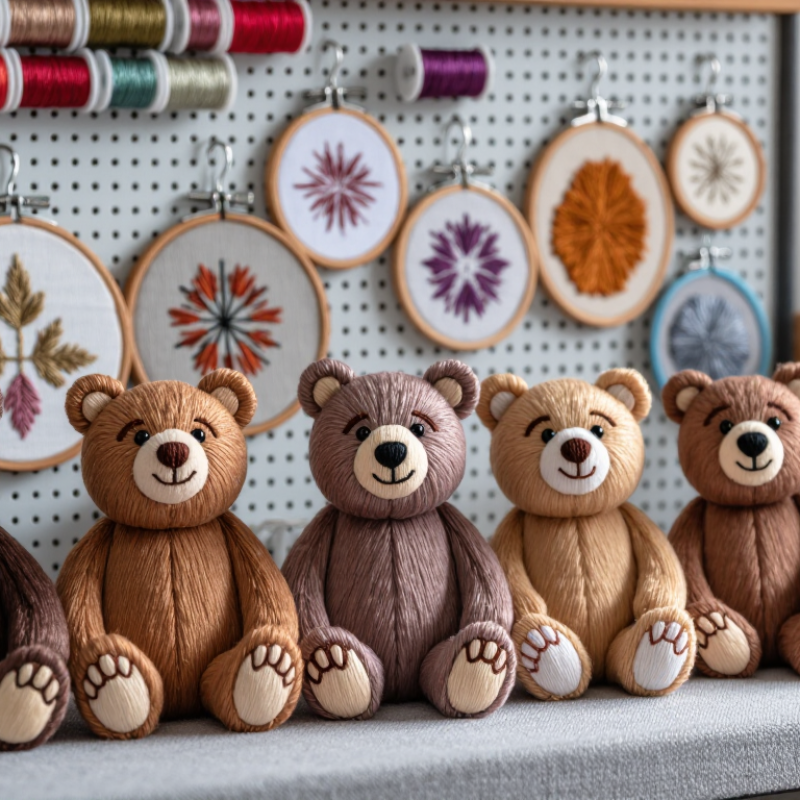
Choosing among the top plush toy embroidery manufacturers worldwide requires more than comparing catalog photos. Plush toy embroidery manufacturing combines soft-material engineering, digital pattern preparation, thread control, stitching accuracy, and careful finishing. A cheerful bear may look simple, yet its facial lines can shift when the fabric stretches. Small errors become visible around the eyes, nose, and paws.
Quality-management expert W. Edwards Deming offered a useful manufacturing principle: “Quality comes not from inspection, but from the improvement of the production process.” Deming was not a plush-toy specialist, but his view remains highly relevant. Reliable suppliers should explain their sampling process, embroidery settings, fabric choices, production controls, and corrective actions. Buyers should also request physical samples, close-up stitch photos, material details, and evidence of appropriate safety testing.
This guide examines manufacturers through practical signals, including design support, embroidery consistency, order flexibility, communication, factory experience, and export capability. It also considers whether a supplier can reproduce the same expression across thousands of toys. That is harder than it sounds.
A polished website proves little.
Some factories may offer excellent stitching but limited customization. Others may provide creative design support while struggling with delivery consistency. No worldwide ranking is perfectly objective, and supplier information can change over time. Therefore, the strongest choice depends on your product goals, target market, quantity, budget, and quality expectations. A promising sample is only the beginning. The real test is repeatable performance.
What Defines a Leading Plush Toy Embroidery Manufacturer?
A leading plush toy embroidery manufacturer combines design skill, process control, and dependable communication. Fortune Business Insights valued the global plush toys market at approximately USD 7.57 billion in 2023. The report projects continued growth through 2032. That expansion raises quality expectations.
Embroidery quality starts with fabric testing and stable machine settings. Skilled technicians adjust thread tension, needle size, and stitch density for each plush surface. Dense stitching can stiffen soft fabric. Loose stitching may distort eyes, letters, or small decorative details. A capable factory tests samples under washing, rubbing, and pulling conditions. It records thread specifications, color references, and inspection results. Those records support traceability.
Safety must remain practical, not decorative. Manufacturers should follow applicable toy-safety requirements and use documented material controls. Independent laboratory testing can verify issues such as sharp points, restricted substances, and small detachable parts. The International Trade Centre’s 2023 trade statistics also show how widely toys move across global supply chains. Reliable suppliers therefore need clear export documentation and consistent packaging checks.
Experience matters here. A production manager who notices uneven satin stitches before shipment protects both quality and trust. No factory is flawless. I have seen minor thread tails reveal larger process weaknesses. Leading manufacturers welcome corrective feedback, measure defect rates, and improve their work instead of hiding imperfections. That attitude defines professionalism more clearly than polished samples alone.
Key Manufacturing Processes and Embroidery Technologies
Top Plush Toy Embroidery Manufacturers Worldwide?
Reliable plush toy manufacturers begin with embroidery digitization, not stitching. Designers convert artwork into machine-readable paths, adjusting stitch direction, density, and underlay. This step controls how letters sit on soft, uneven fabric. Small details often need enlargement.
Sampling follows. A technician places the plush panel in a hoop or custom fixture. Computerized multi-head machines then coordinate needles, thread colors, and trimming cycles. For raised details, chenille or layered embroidery can create a tactile surface. However, excessive height may snag during handling. It can also feel uncomfortable on a child’s face.
Thread selection requires practical testing. Polyester thread usually offers strong color retention and wash resistance. Needle size must match the fabric pile and backing material. Poor choices can leave holes, puckering, or loose loops. Quality teams inspect thread tension, skipped stitches, edge alignment, and back-side cleanliness. They should also test samples after rubbing, washing, and repeated compression.
The best suppliers maintain documented process controls. They record machine settings, approved samples, thread batches, and inspection results. Buyers should request close-up photos and physical prototypes before approving volume production. A manufacturer may have advanced equipment yet weak operator training. Technology alone is not enough. I would also question overly dense artwork. It may look sharper on screen, but plush fabric often needs simpler shapes and fewer stitches. This compromise is easy to overlook.
Top Plush Toy Embroidery Manufacturers by Global Region
Top plush toy embroidery manufacturers are best assessed by regional capability, not factory size alone. Industry estimates vary: the global plush toys market was valued near USD 7.5 billion in 2023, with projected growth above 7% annually through 2030 (Grand View Research, 2024). Different reports use different product definitions. That makes direct rankings imperfect.
East Asia remains strong in dense embroidery, character detailing, and high-volume production. Manufacturers there often support 1,000–5,000-unit orders with computerized stitching and automated thread trimming. South Asia offers competitive labor costs and flexible textile sourcing, although sampling speed can differ between facilities. International Trade Centre trade data shows Asia continues to dominate global toy exports, supporting its role in large-scale plush production.
Europe is notable for traceability, material documentation, and controlled finishing. This matters when toys include small embroidered facial details or washable fabrics. North American manufacturers often perform well in short runs, custom prototypes, and domestic fulfillment. The 2024 global toy safety market analysis also highlights growing demand for testing records and supply-chain transparency. Buyers should request stitch-density samples, colorfastness results, needle-control procedures, and production photographs. A polished sample can still hide weak back stitching. That is where many supplier evaluations become too optimistic. Region alone never proves quality.
Quality, Safety, Customization, and Production Capabilities
Top Plush Toy Embroidery Manufacturers Worldwide?
Quality, Safety, Customization, and Production Capabilities
Reliable plush toy embroidery begins with material control. Experienced manufacturers test fabric softness, colorfastness, filling cleanliness, and seam strength before mass production. Embroidery should feel smooth, with no loose threads or sharp backing near a child’s skin. Small details matter. A poorly secured eye can create a serious hazard.
Safety requires documented processes, not attractive samples alone. Manufacturers should provide batch records, needle-control procedures, and testing reports for applicable toy safety standards. These may include requirements for mechanical strength, flammability, chemicals, and age grading. Independent laboratory testing adds credibility. Still, paperwork is not enough. Production teams must inspect random units during sewing, stuffing, embroidery, and final packing.
Customization depends on both design skill and factory capacity. A capable supplier can convert artwork into clean embroidery files, adjust stitch density, and produce samples before approval. Fine lettering may lose clarity on a small plush surface. That limitation should be discussed early. Production capability also includes stable lead times, flexible minimum quantities, automated stitching, hand-finishing, and secure packaging. I have learned that factories can present excellent prototypes but struggle with color consistency during larger runs. Regular inspections reduce that risk, although they never remove it completely. Clear communication, realistic tolerances, and recorded approvals make the process more dependable.
How to Select the Right Plush Toy Embroidery Manufacturer
Choosing a plush toy embroidery manufacturer requires more than comparing prices. Review its experience with soft fabrics, curved surfaces, and small embroidered details. Ask for recent samples, not only polished catalog images. Examine the back of each design for loose threads, uneven tension, and visible knots. These details often reveal production discipline.
Request a sample made from your actual artwork, fabric, and thread colors. Check whether the eyes, lettering, or patterns remain clear after gentle washing. Confirm the manufacturer’s embroidery equipment, daily capacity, and quality inspection process. A reliable factory should explain its needle types, stitch density, thread materials, and production timeline clearly. Ask for documented testing that matches your target market’s safety requirements.
Communication matters more than many buyers expect. Test response speed and the accuracy of technical answers before placing a large order. Confirm packaging, labeling, color approval, sample revisions, and responsibility for defects in writing. Factory visits or live video inspections can provide useful evidence, although they are not perfect. I once trusted attractive samples too quickly; the bulk stitching looked less consistent. That mistake was avoidable. Leave time for a pre-production sample, independent inspection, and realistic correction cycles. Flexible cooperation is valuable, but vague promises are not.
How to Select the Right Plush Toy Embroidery Manufacturer
This scorecard uses a practical procurement weighting model for comparing plush toy embroidery manufacturers worldwide. The percentages represent recommended evaluation priorities, not company market share or brand performance.
Product safety and embroidery quality should receive the highest attention, followed by production consistency, communication, delivery reliability, customization capability, and total cost. Buyers should verify relevant toy-safety documentation, sample quality, production capacity, and quality-control procedures before placing an order.
FAQS
Designers convert artwork into machine-readable paths. They adjust stitch direction, density, and underlay. Small details may need enlargement.
Sampling tests the artwork on real fabric. A technician uses a hoop or custom fixture. Soft surfaces can distort letters and facial details.
Polyester thread usually retains color and resists washing. Still, practical testing matters. Thread performance can change across fabrics.
Inspect the front and back closely. Look for loose loops, skipped stitches, knots, puckering, and uneven edges. The back often tells the truth.
Chenille or layered embroidery can create a tactile surface. Excessive height may snag during handling. It may also feel uncomfortable against a child’s face.
Samples should undergo rubbing, gentle washing, and repeated compression. Check color, stitch tension, alignment, and thread security afterward. Real use is less tidy.
Request recent samples and a prototype using your artwork, fabric, and thread colors. Confirm equipment, capacity, inspection methods, and production timing.
No. Operator training and process controls remain important. A polished sample can mislead. Ask for machine settings, approved samples, and inspection records.
Put packaging, labeling, color approval, revisions, and defect responsibility in writing. Allow time for independent inspection and correction cycles. Do not rush.
Conclusion
A leading plush toy embroidery manufacturer combines creative design support, reliable production capacity, advanced embroidery technology, and strict quality control. Plush toy embroidery manufacturing typically includes material selection, pattern development, digital file preparation, embroidery, sewing, stuffing, trimming, inspection, and packaging. Modern equipment can create detailed, durable, and consistent designs, while skilled technicians help maintain softness, shape, and visual accuracy across different product sizes. Manufacturers may also offer customized colors, character features, labels, packaging, and production quantities to meet varied project requirements.
When comparing manufacturers by global region, buyers should evaluate their communication, technical expertise, lead times, minimum order quantities, sampling process, and ability to manage international production. Safety testing, child-friendly materials, secure stitching, colorfastness, and dependable quality documentation are essential considerations. The right partner should provide transparent pricing, realistic schedules, responsive service, and flexible customization while maintaining consistent standards from prototype to final delivery.
Blog Tags: