
Plush Toy Manufacturing Insights & Blog
Stay updated with technical guides, soft toy production processes, OEM trends, and safety standards from KID IN U.
What Are the Top Machine Stuffed Soft Toys for Buyers?
Table of Contents
Machine stuffed soft toys remain a practical category for buyers seeking consistent quality, attractive pricing, and reliable production. Their appeal is easy to understand: a child squeezes a soft bear, notices its embroidered eyes, and carries it everywhere. Yet appearance alone does not prove value.
Recent market evidence supports careful buying decisions. Circana reported that the global toy industry faced changing consumer demand and uneven growth in 2024, making product differentiation increasingly important. Grand View Research also identifies plush toys as a significant and expanding segment, supported by character licensing, gifting, and emotional comfort. However, market reports often combine handmade, machine-filled, and licensed products. Their figures are useful, but not perfectly comparable.
Richard Gottlieb, founder of Global Toy Experts and a long-time toy-industry analyst, offers a helpful buyer-focused principle: “The best toy is the one that gets played with.” That idea applies directly to Machine stuffed soft toys. A well-made product should feel evenly filled, recover its shape after squeezing, and show secure stitching around ears, seams, and embroidered details. It should also provide clear material information and age guidance.
The strongest options are not always the largest or softest. Some lose shape quickly. Others use attractive fabric but weak seams. Buyers should examine filling consistency, washability, safety documentation, supplier experience, and repeat-order reliability. Small details matter.
This guide compares the leading types of Machine stuffed soft toys for buyers. It considers comfort, production efficiency, customization, durability, and commercial potential. The category looks simple. It is not.
Types of Machine-Stuffed Soft Toys Popular with Buyers
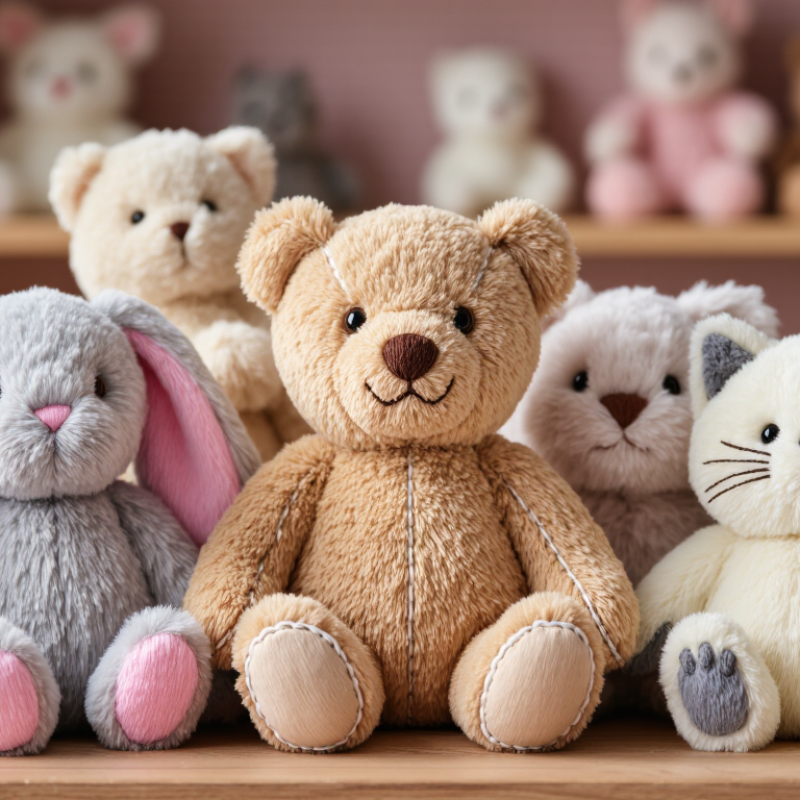
Machine-stuffed animal toys remain popular because their shapes are familiar and easy to display. Buyers often choose bears, rabbits, dogs, cats, and woodland animals. These designs work well in nurseries, gift shops, and seasonal collections. Their appeal depends on soft fabric, balanced filling, and tidy stitching. A lopsided ear can reduce perceived quality quickly.
Food-shaped plush toys attract buyers seeking playful, colorful products. Bread, fruit, desserts, and drink-themed cushions create strong visual interest. They often use simple forms, making automated stuffing more consistent. Buyers should check whether the filling stays evenly distributed after squeezing. Some samples look attractive but feel too firm. That detail is easy to miss.
Character-inspired soft toys are also widely purchased, especially when they feature original faces, unusual costumes, or expressive eyes. Mini plush toys suit party favors, capsule displays, and small gifts. Larger machine-stuffed cushions appeal to home decorators and children who want huggable shapes. Procurement teams usually inspect seam strength, loose fibers, odor, fabric recovery, and stuffing cleanliness. I have found that softness alone is not enough. A toy may feel pleasant but lose its shape after repeated handling. Size labels can also be imperfect, so physical samples deserve more trust than printed measurements. Reliable suppliers should provide clear material details and consistent production records.
What Are the Top Machine-Stuffed Soft Toys for Buyers?
Animal plush toys lead buyer interest because they suit gifting, nursery décor, and everyday comfort. Character, pillow, keychain, and interactive plush toys also remain popular across different age groups and purchase occasions.
The chart uses a normalized buyer-interest index from 0 to 100 for common machine-stuffed soft-toy categories. It is intended for category comparison and excludes company and brand data.
Key Materials Used in Machine-Stuffed Soft Toys
What Are the Top Machine-Stuffed Soft Toys for Buyers?
Key materials decide a soft toy’s comfort, durability, and safety. Polyester fiberfill remains common because it is light, springy, and machine-friendly. Textile Exchange’s 2024 Materials Market Report recorded 124 million tonnes of global fiber production in 2023. Polyester represented about 57% of that volume. This scale supports stable sourcing, but it does not guarantee quality. Low-grade filling may flatten after repeated washing. Buyers should request fiber density, recovery testing, and washing results.
The outer fabric also needs careful selection. Polyester plush offers strong color retention and resists shrinking. Cotton feels breathable and natural, but it can wrinkle, absorb moisture, and lose shape faster. Some manufacturers blend cotton with polyester for balance. Recycled polyester can reduce reliance on virgin resources. However, it is not automatically greener. The full impact depends on energy use, dyeing, transport, and product lifespan. That point is often overlooked.
A practical review should also check seam strength, stuffing distribution, and loose-fiber control. Independent laboratory reports should support applicable toy-safety testing.
Tips: Choose filling with even spring-back, not simply maximum softness. Ask for fabric composition and recycled-content evidence. Test a sample after several wash cycles. Examine ears, corners, and embroidered areas closely. Small weak points often reveal larger production problems. Suppliers should also explain how stuffing machines prevent hard lumps inside the toy.
How Machine Stuffing Affects Toy Quality and Safety
Machine stuffing strongly influences the quality and safety of soft toys buyers choose. A well-calibrated machine distributes polyester filling evenly, leaving no hard lumps or empty pockets. This creates a stable shape and reduces pressure on seams during handling. Overstuffing can make fabric stretch and stitching fail. Understuffing may cause the toy to collapse, especially around the head, limbs, and corners. Reliable production also depends on clean equipment, controlled filling materials, and documented quality checks.
Tips: Ask suppliers how they test filling density, seam strength, and loose fibers. Request photos of opened samples, not only polished product images. Check whether eyes, noses, and decorative parts remain secure after repeated pulling. Age guidance should match the toy’s construction. Small detachable pieces need special attention.
Buyers should inspect several samples from the same production batch. One excellent sample does not prove consistent manufacturing. I have seen attractive toys lose their shape because filling was uneven inside. That problem is easy to miss at first. Softness alone is not a safety measure. The best machine-stuffed toys combine balanced filling, durable stitching, washable materials, and clear inspection records. Still, no process is perfect. A careful buyer should question unusual softness, strong chemical odors, loose threads, or unexplained changes between samples.
Factors Buyers Consider When Choosing Soft Toys
When buyers compare machine-stuffed soft toys, safety usually comes before appearance. They examine fabric softness, stitching strength, filling quality, and loose decorative parts. A toy may look charming, yet weak seams can open after repeated handling. Details matter. Buyers should request material information and suitable age guidance from the supplier.
Washability also affects purchasing decisions, especially for children’s toys used daily. Removable covers, colorfast fabric, and quick-drying filling can reduce maintenance problems. However, “machine washable” should not be accepted without clear washing instructions. I have seen product descriptions sound reassuring while leaving drying requirements unclear. That small gap can cause odor or misshapen stuffing.
Size and weight influence shipping costs, shelf space, and customer comfort. Buyers often prefer consistent dimensions across large orders, but handmade-looking variation may still appeal to some markets. Production samples should be checked for uneven filling, flattened corners, and rough seams before approval. Safety testing documents from qualified laboratories can improve trust, although paperwork alone cannot replace physical inspection. A practical review should include squeezing the toy, checking hidden seams, and observing how it behaves after washing. No checklist is perfect. Preferences also change by season, age group, and sales channel.
What Are the Top Machine Stuffed Soft Toys for Buyers? - Factors Buyers Consider When Choosing Soft Toys
| Buyer Evaluation Dimension | Common Benchmark or Product Range | Why Buyers Consider It | Typical Priority |
|---|---|---|---|
| Safety and Age Suitability | Securely attached or embroidered features; no easily detachable small parts for products intended for children under 3 years | Reduces choking, suffocation, and injury risks while supporting compliance with applicable toy-safety requirements | Very High |
| Filling Material | Polyester fiberfill is commonly used; resilient filling should recover its shape after compression | Affects softness, loft, weight, durability, and the toy’s ability to maintain its shape during shipping and use | High |
| Outer Fabric | Short-pile plush, velboa, fleece, or minky-style fabrics with a soft, even surface | Influences touch comfort, visual appeal, pilling resistance, color consistency, and perceived quality | High |
| Seam Strength and Stitching | Even seams, reinforced stress points, and no exposed loose threads or stuffing | Helps prevent seam opening, fiber leakage, deformation, and returns caused by poor construction | High |
| Size and Weight | Popular retail formats commonly range from approximately 15–40 cm in height, depending on the character and use case | Determines shelf presence, shipping cost, storage requirements, handling comfort, and suitability as a gift | Medium-High |
| Shape Retention | The toy should regain its intended form after unpacking and moderate compression | Machine stuffing consistency affects appearance, customer satisfaction, and product presentation on shelves or online listings | High |
| Washability and Care | Surface-clean or machine-washable construction with clear care instructions, where applicable | Supports hygiene, extends product life, and makes the toy more practical for children and frequent-use environments | Medium-High |
| Color and Design Accuracy | Consistent color matching, proportional features, clean embroidery, and accurate sample-to-production appearance | Strongly influences shelf appeal, character recognition, gifting value, and customer reviews | High |
| Customization Flexibility | Options may include custom shapes, colors, embroidered details, labels, packaging, and several size variations | Allows retailers, promotional buyers, and gift businesses to create differentiated products for specific audiences | Medium-High |
| Production Consistency | Consistent filling density, dimensions, stitching, color, and feature placement across the production batch | Reduces quality variation, inspection issues, customer complaints, and inconsistent product photography results | Very High |
| Packaging and Shipping Efficiency | Protective packaging with compression or vacuum packing used when suitable for the toy’s materials and shape | Affects freight volume, storage space, unpacking recovery, retail presentation, and protection from dust or moisture | Medium |
| Order Flexibility and Lead Time | Buyers commonly compare sample approval time, production scheduling, minimum order quantities, and replenishment capability | Supports inventory planning, seasonal launches, test orders, and faster response to changes in demand | Medium-High |
| Total Cost of Ownership | Evaluation normally includes unit price, sampling, tooling, packaging, freight, inspection, compliance testing, and expected defect costs | The lowest unit price does not always provide the best margin when quality problems, freight, or rework are included | Very High |
Note: Benchmarks are general purchasing guidelines. Exact safety, labeling, testing, and documentation requirements depend on the destination market, product design, materials, and intended age group.
Care, Testing, and Sourcing Requirements for Buyers
What Are the Top Machine Stuffed Soft Toys for Buyers?
Care, Testing, and Sourcing Requirements for Buyers
Buyers should inspect how each soft toy is stuffed, stitched, and finished. Even filling matters. Uneven fiber distribution can create hard corners or flat spots after washing. Request production samples from the actual factory, not only showroom samples. Check seam strength around ears, feet, and embroidered details. These areas often receive the most pulling during play.
Testing should match the toy’s target age and destination market. Ask for current laboratory reports covering flammability, harmful substance limits, seam security, and small detachable parts. For machine-stuffed toys, compression testing is useful because repeated squeezing can expose weak seams. Review the filling declaration, fabric composition, dye information, and batch traceability. A clear lot code helps buyers investigate defects quickly.
Care instructions should be practical and tested. Wash one sample several times, then inspect its shape, color, smell, and filling recovery. Air drying may be safer than high heat for certain fabrics. Confirm that labels remain readable after cleaning. Suppliers should explain their hygiene controls, storage conditions, and packaging process. Factory audits add confidence, but they do not replace product testing.
No checklist is perfect. I have seen attractive samples fail after simple washing, usually because buyers trusted appearance too much. A small failure during evaluation is useful if the sourcing team records it and corrects the specification before production.
FAQS
Polyester fiberfill is widely used. It is light, springy, and suitable for automated stuffing. However, low-grade filling may flatten after washing. Ask for density and recovery test results.
Polyester plush usually keeps color and resists shrinking. Cotton feels breathable but may wrinkle and absorb moisture. Blended fabric can balance comfort and shape retention. Check fabric composition before approving production.
Not automatically. Its impact depends on energy, dyeing, transport, and product lifespan. Request evidence for recycled content. A longer-lasting toy may reduce replacement waste.
Squeeze the toy across its body. The filling should recover evenly. Look for hard lumps, flat spots, and empty corners. Pay special attention to ears and feet. Small weak points matter.
Check ears, feet, corners, and embroidered areas. These parts often receive strong pulling during play. Look for skipped stitches, loose threads, or open gaps. Compression testing can reveal hidden weaknesses.
Request current laboratory reports for the target age and market. Reports may cover flammability, harmful substances, seam security, and detachable parts. Also review filling, fabric, dye, and batch information. A lot code helps trace defects.
Wash a production sample several times. Inspect its shape, color, smell, and filling recovery afterward. Check whether care labels remain readable. Air drying may protect some fabrics better than high heat. One wash is not enough.
No. Request samples from the actual production factory. Showroom pieces may not represent production consistency. Review stuffing distribution, stitching, packaging, and hygiene controls. I would not trust appearance alone.
Conclusion
Machine stuffed soft toys are popular with buyers because they offer consistent shapes, neat seams, and reliable filling density across large production runs. Common choices include animal figures, character-inspired designs, plush pillows, educational toys, and seasonal gift items. Materials such as polyester fiberfill, cotton blends, plush fabrics, short-pile fleece, and durable stitching threads influence softness, appearance, and long-term performance. Automated stuffing can improve uniformity, but careful control is still necessary to prevent hard areas, loose filling, weak seams, or uneven shapes.
When selecting soft toys, buyers usually consider age suitability, design appeal, size, softness, durability, cleanability, packaging, and production capacity. They also expect appropriate safety testing, secure eyes and decorative parts, non-irritating materials, and clear care instructions. Regular quality inspections should check stuffing distribution, seam strength, surface condition, and resistance to normal handling. Reliable sourcing requires clear specifications, sample approval, traceable production procedures, and consistent communication with suppliers to ensure the finished toys meet safety, quality, and customer expectations.

Blog Tags: