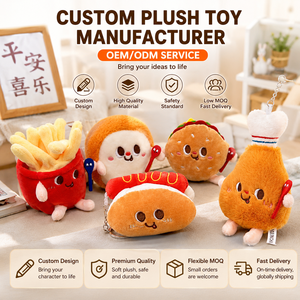
Featured EN71 Compliant Custom Plush Series
Precision-stitched, hypoallergenic, and certified soft toys engineered for international retail, promotional campaigns, and global brand distribution.
EN71 Compliance & Toy Safety Engineering: The Technical Benchmark
In the contemporary global toy supply chain, navigating safety regulations is the single most critical factor for B2B importers, brand owners, and retail distributors. As a premier China Wholesale EN71 Plush Factory & Exporter, our manufacturing paradigm centers on complete compliance with European Standard EN71, alongside US ASTM F963 and CPSIA protocols. Understanding the technical nuances of these standards safeguards brands against product recalls, legal liabilities, and customs rejections.
Deconstructing EN71 Technical Requirements for Plush Manufacturing
European toy safety standards require rigorous physical, chemical, and flammability parameters. Plush toys, being soft-filled items intended for children under 36 months as well as older age brackets, undergo intensive laboratory evaluation before market entry:
| EN71 Standard | Technical Scope & Testing Parameter | Factory QA Implementation Protocol |
|---|---|---|
| EN71 Part 1 | Mechanical and Physical Properties (Seam strength, small parts torque/tension, sharp edges). | 90-Newton seam pull testing, 0.7nm torque tests on eyes/noses, double-lock safety stitching. |
| EN71 Part 2 | Flammability (Rate of flame spread on plush pile, synthetic velour, and felt fabrics). | Usage of flame-retardant treated synthetic fibers with burn speed controlled under 30mm/sec. |
| EN71 Part 3 | Migration of Certain Elements (Limits for 19 heavy metals including Lead, Cadmium, Arsenic). | OEKO-TEX Class 1 certified raw fabrics, eco-friendly dye houses, and zero-lead plastic eye inserts. |
| REACH & Phthalates | Chemical restrictions on plasticizers (DBP, BBP, DEHP, DINP) in internal and external components. | 100% Virgin PP (Polypropylene) cotton filling, non-toxic PVC accessories, phthalate-free coatings. |
Our production line integrates digital tension meters and automated metal detection systems. Every individual plush unit passes through a dual-head conveyor metal detector capable of identifying ferrous or non-ferrous fragments down to 1.0mm diameter. This eliminates risks associated with broken sewing needles—a non-negotiable safety criterion for Tier-1 European importers and hypermarket chains.
Vertically Integrated OEM/ODM Infrastructure
Unlike trading intermediaries or fragmented assembly workshops, our centralized facility unifies pattern design, laser cutting, computer embroidery, automated stitching, mechanical filling, and final sterilization under one roof. This vertical integration guarantees zero third-party markups, consistent lot-to-lot color matching, and absolute control over production schedules.
3D CAD Prototyping & Pattern Engineering
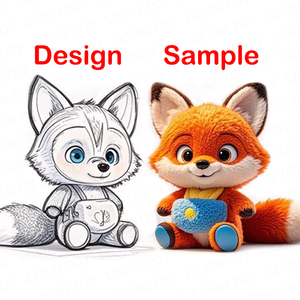
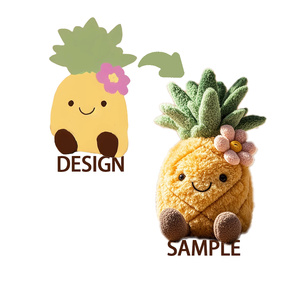
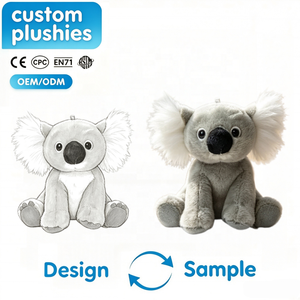
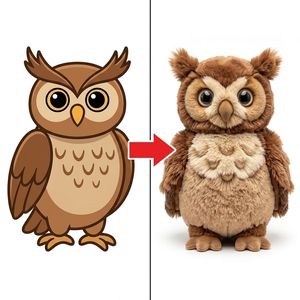
Transforming 2D client sketches, character vector files, or IP concepts into dimensionally accurate 3D plush prototypes within 3 to 5 business days using computer-aided pattern design software.
High-Speed Multi-Head Embroidery
Equipped with 12-head Tajima precision embroidery machinery, achieving crisp logo execution, facial expressions, and complex textile detailing with colorfast polyester threads.
Automated Pneumatic Stuffing
Utilizing high-pressure carded fiber blowers that ensure uniform density, softness retention, and lump-free distribution of 7D/15D conjugated virgin PP cotton throughout the doll torso.
Rigorous In-House Quality Assurance
Operating under ISO9001 guidelines with a 95%+ first-pass quality rate. Multi-point inspections include fabric weight checks, seam tension pull tests, and zero-needle contamination verification.
Future Sourcing Trends for Plush Toys (2025–2030)
The global soft toy market is undergoing a seismic shift driven by changing consumer demographics, environmental legislation, and omnichannel distribution models. B2B buyers must align their procurement strategies with these emerging macroeconomic trends to maintain shelf-competitiveness and margin profitability.
1. The Rise of Sustainable & Circular Plush Textiles (RPET)
Environmental sustainability has transitioned from a niche marketing angle to a mandatory retail requirement across Europe and North America. Procurement officers are rapidly pivoting toward Recycled Polyethylene Terephthalate (RPET) plush fabrics derived from post-consumer plastic bottles. Our factory delivers fully traceable GRS (Global Recycled Standard) certified plush shell fabrics and recycled stuffing fibers. Every 20cm RPET plush toy diverts approximately 6 to 8 plastic bottles from marine ecosystems, satisfying both eco-conscious consumer demand and EU ESG mandates.
2. "Kidult" Demographic Expansion & Collectible Blind Boxes
No longer restricted to infant and toddler categories, plush toys have captured significant market share among young adults ("Kidults"). High-detail anime plushies, desktop stress-relief companions, plush keychains, and blind-box stuffed collectibles represent the fastest-growing sector in retail toy sales. Designing for this segment demands higher precision in facial sculpting, fine-cut minky fabrics, weighted ceramic bead fillings, and specialized custom retail packaging solutions.
3. Sensory, Weighted, and Tactile Emotional Support Plushies
Post-pandemic health and wellness trends have elevated the demand for tactile, sensory-focused plush items. Weighted plush animals infused with non-toxic glass beads (providing deep pressure touch simulation) and ultra-soft 4-way stretch spandex plushies are seeing exponential growth in international healthcare, wellness, and lifestyle retail channels.
Manufacturing Technology & Material Science Innovations
Modern plush production is no longer a manual craft; it is a blend of textile engineering and automated manufacturing. Over the past decade, material science innovations have fundamentally improved tactile quality, durability, and safety profiles of stuffed animals.
Advanced Fabric Formulations: Beyond Basic Velour
Our factory utilizes a diverse taxonomy of high-performance plush textiles customized for specific market positioning:
- Super Soft Crystal Velour (GSM 220–320): Featuring an ultra-short pile height with an exceptionally silky hand-feel, ideal for claw machine toys, keychains, and baby comfort blankets.
- PV Fleece & Long Pile Rose Velvet: High-density curled synthetic fibers mimicking real animal fur, tailored for premium teddy bears, forest wildlife collections, and high-end retail brands.
- 4-Way Stretch Micro-Spandex: Highly elastic polyurethane-polyester blends used for squishy, malleable plush dolls filled with micro-microfiber PP cotton.
- Organic Cotton & Unbleached Bamboo Velour: Hypoallergenic, dye-free natural textiles specifically crafted for infant nursery lines adhering to GOTS (Global Organic Textile Standard).
Digital Textile Printing vs. Traditional Screen Printing
To capture complex gradient artwork, character cheeks, and photo-realistic textures, traditional screen printing has been replaced by high-definition sublimated thermal transfer and direct-to-fabric digital printing. This methodology guarantees zero ink cracking, maintains fabric softness without stiff residues, and strictly complies with EN71-3 chemical migration thresholds.
Turnkey B2B Procurement Roadmap: Concept to Container Loading
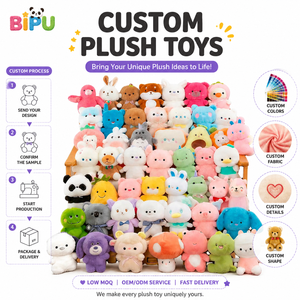
Streamlining international procurement requires a structured, transparent manufacturing pipeline. Our enterprise workflow minimizes lead-time bottlenecks and eliminates design discrepancies prior to full-scale mass production.
B2B Procurement & Technical FAQ
Essential answers for professional buyers regarding compliance, factory audits, MOQs, and custom production timelines.
Q1: How does your factory verify EN71 compliance prior to shipment?
Every raw material batch (fabrics, thread, PP cotton, eyes, care labels) undergoes pre-screening against EN71 Part 3 heavy metal migration limits and REACH SVHC candidate lists. For bulk orders, we work directly with internationally recognized testing agencies such as SGS, Intertek, or TÜV Rheinland to issue official test reports under your brand name prior to container release.
Q2: What is the Minimum Order Quantity (MOQ) for custom OEM plush manufacturing?
Our standard production MOQ typically ranges from 500 to 1,000 pieces per design, depending on the product dimension and fabric customization requirements. For promotional items or mini claw machine plushies (10cm–15cm), MOQs start at 2,000 units. We also offer multi-character assortment runs within a single fabric dye lot to accommodate growing brands.
Q3: Can you manufacture custom plushies based solely on 2D images or hand sketches?
Yes. Our engineering team specializes in translating 2D conceptual illustrations, digital mascots, or front-and-side view hand drawings into physical 3D plush prototypes. We sculpt initial paper patterns, select color-matched fabrics via Pantone textile codes, and adjust fill density to achieve the exact character proportion specified in your brand guidelines.
Q4: What safety mechanisms are implemented to prevent needle contamination in stuffed animals?
We enforce strict needle-control protocols. All sewing operators must return broken needle fragments to account for 100% of the blade before receiving a replacement. Furthermore, 100% of finished plush items pass through automated conveyorized metal detectors set to a sensitivity threshold of Fe 1.0mm. Any unit triggering an alarm is quarantined immediately.
Q5: What are the standard lead times for prototyping and mass manufacturing?
Sample development generally requires 5 to 7 working days from artwork confirmation. Once the golden sample is approved and the production deposit is received, mass manufacturing takes approximately 30 to 45 days. Turnkey lead times (including sea freight delivery) average around 60 days to European and North American ports.
Q6: Do you supply GRS certified Recycled Polyester (RPET) fabrics for eco-friendly product lines?
Yes, we maintain a complete supply chain for GRS-certified recycled plush materials. We provide Transaction Certificates (TC) validating that both the outer plush pile and the inner fiberfill originate from post-consumer recycled PET plastic bottles, meeting stringent European green procurement criteria.
Q7: How are plush toys packed for international export to minimize freight costs?
To optimize container load capacity, we utilize industrial vacuum sealing compression machines. Vacuum packing reduces shipping volume by up to 50% to 60%, drastically reducing per-unit sea or air freight expenses. Upon opening the master carton, the plushies naturally expand back to their original loft and fluffiness within 24 hours.
Partner with China's Premier EN71 Certified Plush Manufacturer
Gain a competitive edge in your market with factory-direct pricing, certified toy safety, and end-to-end OEM/ODM custom development capabilities.
Get Catalog