Custom Plush Prototypes & Production-Ready Designs
Explore our latest rapid sample developments engineered with custom embroidery, precision pattern cutting, and eco-certified plush materials.
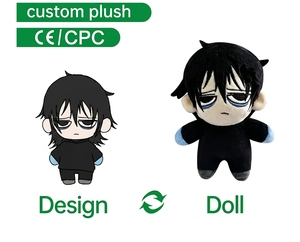
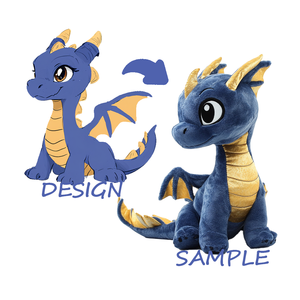
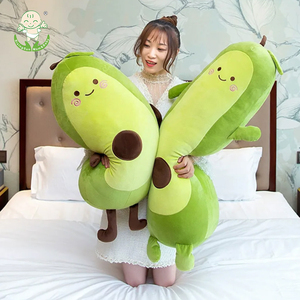
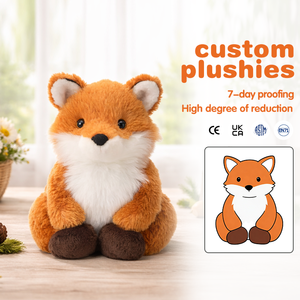
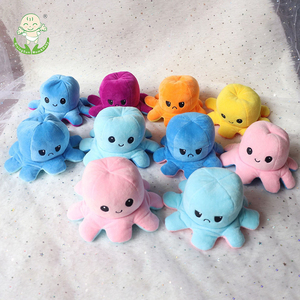
Engineering Excellence in Custom Plush Sample Development
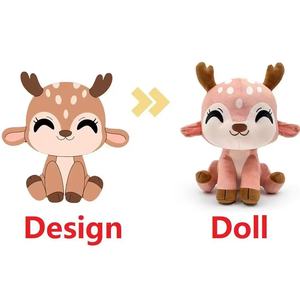
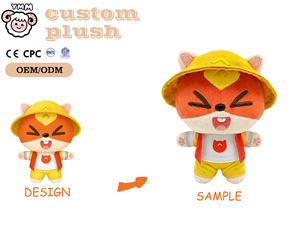
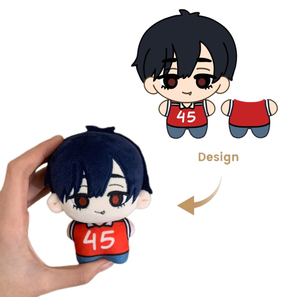
In the global retail and promotional toy ecosystem, transitioning a two-dimensional conceptual sketch or digital vector artwork into a compliant, tactile, three-dimensional plush product requires rigorous engineering. As a premier China wholesale sample development supplier and exporter, our production architecture bridges the gap between artistic vision and industrial mass production. Sample development is not merely about crafting a single visual mockup; it is an analytical process where fabric drape, seam strength, fill density, structural balance, and regulatory compliance are harmonized to guarantee scalable manufacturing.
Modern B2B procurement officers, IP brand licensors, and enterprise retail buyers face significant supply chain challenges: inconsistent pattern translation, delayed sampling iterations, material standard discrepancies, and failure to meet international safety protocols such as ASTM F963 and EN71. Our vertically integrated facility addresses these bottlenecks by combining digital pattern drafting, computerized 12-head embroidery digitizing, precise laser panel cutting, automated stuffing, and multi-stage metal detection under a unified quality control protocol.
Core Procurement Advantage: Vertically integrated sample development ensures that 100% of pattern geometry, stitch tension specifications, and fabric yield parameters established during the prototyping phase are replicated in full-scale mass production—eliminating post-approval batch variance.
The 7-Step Industrial Sample Development Protocol
To deliver high fidelity to client specifications while keeping prototyping lead times under 7 business days, our engineering team executes a standardized seven-stage sampling workflow:
1. Vector & Tech-Pack Audit
Deconstruction of 2D art files into volumetric geometry. We analyze seam allowances, pile direction, structural weight distribution, and internal joint mechanisms.
2. Digital Pattern Drafting
Using specialized CAD plush modeling software, 3D anatomical forms are unfolded into flat fabric panels, optimizing fabric yield and minimizing scrap ratios.
3. Thread & Stitch Digitizing
Embroidery files are programmed for high stitch density (stitches per inch / SPI: 8–12), determining underlay density, stabilizer backing, and thread tension parameters.
4. Material Sourcing & Testing
Selection of certified OEKO-TEX and GRS-compliant fabrics—ranging from 280 GSM to 450 GSM crystal super-soft boa, velboa, faux fur, or recycled polyester fleece.
5. Precision Fill Calibration
Injection of 100% virgin 3D/7D hollow conjugated siliconized polyester fiberfill to achieve target firm-versus-squishy tactile feedback without clumping.
6. Compliance Pre-Audit
In-house seam pull-force testing (>70N / 15 lbs), small parts torque testing, and dual-pass needle detection scanning to guarantee international safety compliance.
Material Engineering & Specification Matrix
Selecting the correct raw materials during sample development directly impacts unit costs, tactile appeal, and safety compliance. Below is our standard material engineering matrix applied across OEM/ODM procurement orders:
| Material Category | Technical Specification | Density / Weight | Primary B2B Application | Regulatory Standard |
|---|---|---|---|---|
| Crystal Super-Soft Boa | 100% Polyester Micro-Filament, 1.5mm–3mm pile | 280 – 380 GSM | Mascots, Plush Dolls, Keychains, Infant Toys | EN71-1/2/3, ASTM F963, REACH |
| RPET Recycled Plush | Post-Consumer Recycled Bottle Fiber (GRS Certified) | 300 – 420 GSM | Eco-Friendly Retail Lines, Corporate ESG Gifting | Global Recycled Standard (GRS) |
| Long-Pile Faux Fur | Acrylic/Polyester Blend, 15mm–35mm pile height | 400 – 650 GSM | Lifelike Animals, Collectible Premium Figures | ISO 8124, CPSIA Lead/Phthalate |
| Virgin Polyester Fiberfill | 3D/7D Hollow Conjugated Siliconized Fiber | N/A (Fill Density: 0.03-0.05g/cm³) | Internal Stuffing for All Plush Categories | Flame Retardant BS5852 / CA TB117 |
| Custom Embroidery Thread | High-Tenacity Madeira Rayon / Polyester Thread | 120D/2 High Density Stitching | Facial Features, Logos, Detailed Branding Tags | Colorfastness ISO 105-X12 Grade 4+ |
Future Procurement & Global Plush Manufacturing Trends (2025–2030)
The global plush toy market is undergoing a rapid transition driven by changing consumer expectations, stringent ESG mandates, and technological integration. B2B buyers must align with forward-looking exporters capable of navigating these structural shifts.
1. Transition to Circular Economy & GRS Certified Materials
Environmental legislation in the European Union and North America is making sustainable material sourcing mandatory. Global importers are phasing out virgin petroleum-based synthetic fabrics in favor of GRS (Global Recycled Standard) verified post-consumer plastics. Our factory integrates closed-loop recycling processes, enabling brand partners to offer products made from 100% recycled PET bottles, complete with transaction certificates (TC) for full traceability.
2. AI-Assisted Prototyping & Virtual Tech-Pack Generation
Traditional sample development often involved 3 to 5 back-and-forth physical revisions. Today, using AI-driven 3D rendering and parametric pattern software, we generate digital twin prototypes before cutting fabric. This reduces sample revision cycles by up to 60%, drastically cutting down product development costs and accelerating time-to-market for viral retail products.
3. Micro-Batch Flexibility with Scalable Mass Production
E-commerce brands and DTC retailers require agile supply chains capable of testing market demand via smaller initial production orders (300 to 500 units) before committing to full container loads. Our manufacturing infrastructure supports flexible pilot runs while maintaining the low unit economics of mass factory output.
Factory Floor Operations: The In-House Production Advantage
Subcontracting critical manufacturing steps leads to quality drops, delivery delays, and intellectual property leaks. Our facility maintains 100% vertical integration in Hosur, Krishnagiri District, Tamil Nadu, ensuring complete operational transparency across all stages:
Automated Laser & Die Cutting
Computerized multi-layer fabric cutters guarantee millimeter-accurate panel shapes, perfectly aligning fabric pile orientation and eliminating raw edge fraying across thousands of units.
- Tolerance precision within ±0.5mm
- Zero distortion on multi-layered pile fabrics
- Optimized nest algorithms for maximum material efficiency
High-Density 12-Head Embroidery
Our automated embroidery array executes intricate facial expressions, corporate logos, and complex patterns with ultra-durable lock-stitch construction.
- Multi-color thread auto-switching capability
- Stitch densities tuned to prevent fabric puckering
- 100% inspection for thread breakage and back-stitching integrity
Pneumatic Metered Stuffing
Machine stuffing using regulated air pressure ensures uniform fiber distribution across limbs, head cavities, and main torsos, eliminating lumpy textures.
- Electronic weight calibration per design
- Consistent weight tolerances (±3% deviation)
- Anti-clumping carding machines for smooth fiber fluffing
Dual-Pass Metal & Needle Inspection
Child safety is paramount. Every completed plush item passes through conveyor-belt metal detectors tuned to detect broken needle fragments down to 0.8mm.
- Strict ISO 9001 quality management workflows
- 100% log verification for every production box
- Lockbox quarantine area for any flagged units
International Regulatory Compliance & Quality Protocols
Exporting to global destinations such as the US, EU, UK, Japan, and Australia requires full compliance with regional consumer product safety mandates. Our dedicated QC division conducts rigorous testing on all sample prototypes prior to client dispatch:
- Physical & Mechanical Safety (EN71-1 / ASTM F963-17): Pull testing on seams and attached plastic components (eyes, noses) using a steady 70N (15.7 lbf) tension force for 10 seconds to eliminate choking hazards.
- Flammability Testing (EN71-2 / 16 CFR 1500.44): Measuring flame spread rates on surface plush pile fabrics to ensure self-extinguishing or compliant low-flammability performance.
- Chemical Heavy Metal Analysis (EN71-3 / CPSIA Lead & Phthalates): Testing all dyes, plastic pellets, internal wires, and fabric finishes for SVHC (Substances of Very High Concern) under EU REACH regulations.
- Azo Dye & Formaldehyde Verification: Guaranteeing zero skin-sensitizing aromatic amines or residual processing chemicals in contact-level textile components.
Comprehensive B2B Procurement FAQ
Below are detailed responses to the most frequent inquiries from international buyers, brand owners, and OEM supply chain directors regarding sample development and volume manufacturing:
What is the standard lead time for custom plush sample development?
Our standard sample turnaround is 5 to 7 business days from the moment artwork/tech-packs are confirmed and material specs are selected. Complex prototypes involving mechanical sound boxes or internal skeletal armatures may require 8 to 10 days.
What vector format or files are required to initiate a sample quote?
We accept AI (Adobe Illustrator), CDR, PDF, and high-resolution PNG tech-packs with front, side, and back views. If technical vector art is unavailable, our artwork team can draft manufacturing-ready tech packs from reference photos or 2D sketches.
How do you protect customer IP and proprietary character designs?
We enforce strict Non-Disclosure Agreements (NDAs) prior to receiving any design assets. All client CAD patterns, embroidery digitized files, and physical master samples are stored in restricted-access internal servers and secure vault archives.
What are the Minimum Order Quantities (MOQ) for mass production?
Our flexible MOQ starts at 300 to 500 units per style for standard plush sizes (15cm to 35cm). For smaller keychains (5cm-10cm) or custom dyed pantone fabrics, MOQs typically start at 1,000 units.
Can custom woven labels, hangtags, and retail packaging be prototyped?
Yes. Full OEM branding integration—including woven seam labels, barcode hangtags, printed polybags, custom display boxes, and eco-friendly FSC-certified packaging—is developed and approved during the sampling stage.
What is your first-pass sample approval rate?
Thanks to digital CAD pattern pre-modeling and experienced master pattern makers with over 15 years of plush engineering experience, our first-pass sample approval rate exceeds 95% across international client orders.
What are the standard payment terms for sample development and bulk orders?
Sample fees are paid upfront and are 100% refundable upon placing the bulk production order. For mass production, standard terms are 30% deposit upon sample sign-off and 70% balance prior to shipment dispatch following final AQL 2.5 QC inspection.
Do you offer eco-friendly recycled plush option samples?
Yes. We stock GRS-certified recycled plush fabrics and 100% recycled fiberfill. We provide complete GRS Transaction Certificates (TC) with bulk shipments to support your brand's sustainability claims.
Ready to Develop Your Custom Plush Prototype?
Partner with an industry-leading sample development supplier. Speak directly with our engineering team, request material swatches, or submit your tech pack for an instant production quotation.
Get Catalog