
Featured Weighted Plush & Custom Plushie Collections
Explore our export-grade plush toy manufacturing capabilities, engineered with precise weight distribution, ergonomic density, and certified safety compliance.
The Science & Market Evolution of Therapeutic Weighted Plush Toys
The global soft toy industry has witnessed a paradigm shift toward comfort companion plushies, driven by the consumer demand for sensory regulation, anxiety reduction, and emotional wellness. Weighted plush animals leverage the neurobiological principles of Deep Pressure Touch (DPT)—a form of tactile sensory input that stimulates serotonin and melatonin production while lowering cortisol levels.
Global procurement teams navigating the weighted plush supplier landscape must evaluate manufacturers not merely on unit cost, but on mechanical compliance, bead containment engineering, and fabric tensile durability. Sourcing managers must understand the physical chemistry of filling materials (such as hypo-allergenic glass microbeads versus virgin PE/PP pellets) and the structural ergonomics of internal compartment stitching.
Technical Evaluation Framework for Weighted Plush Sourcing
Key structural criteria enterprise buyers use to audit OEM factories and prevent structural product recalls.
Weight Media Integrity
Leading factories utilize odorless, high-purity glass microbeads (0.6mm–1.2mm) encased in non-woven inner lining chambers. This prevents shifting, maintains center-of-gravity distribution, and ensures washability without degradation.
Seam & Burst Strength Testing
Weighted stuffed animals require minimum 45N to 70N seam strength endurance under ASTM F963 and EN71-1 tension tests. Top exporters implement multi-thread chain stitching and reinforced stress-point bar-tacking.
Metal Detection & Safety Standards
Fully integrated factories route 100% of finished plush units through dual-head conveyor metal detectors (detecting ferrous particles ≤ 1.0mm) to guarantee needle-free, child-safe dispatch.
Manufacturing Hub Benchmark: Global Weighted Plush Exporters
Evaluating sourcing regions requires analyzing raw material supply chains, labor technical skill, compliance certifications, and freight logistics. Below is an executive benchmark comparing leading manufacturing hubs for OEM weighted plush production:
| Manufacturing Hub | Key Vertical Capabilities | Lead Time Range | Quality First-Pass Rate | Compliance Certifications |
|---|---|---|---|---|
| Hosur Cluster (India) | Vertically Integrated (Cutting, 12-Head Embroidery, Stuffing, QC) | 45 - 60 Days | 95% - 98% | EN71, ASTM F963, ISO 8124, REACH |
| Dongguan Cluster (China) | High-Volume Automation, Custom Synthetic Plush Fur Sourcing | 30 - 45 Days | 92% - 96% | BSCI, ICTI CARE, SMETA, CE |
| Yangzhou Hub (China) | Mass Market OEM, Rapid Sample Prototyping | 35 - 50 Days | 90% - 94% | ISO 9001, CE, CPSC Standard |
| Binh Duong (Vietnam) | Mid-to-Large Scale Assembly, Cut & Sew Focus | 50 - 70 Days | 88% - 93% | BSCI, Disney FAMA Certification |
Future Sourcing & Procurement Trends in Weighted Plush Manufacturing
As the global sensory plush market expands toward an estimated $3.2 Billion valuation by 2030, enterprise supply chains are evolving around four core industrial shifts:
1. GRS-Certified Recycled Fabrics & Bio-Based Fillers
Environmental governance (ESG) regulations across North America and the EU are mandating traceable materials. Exporters are substituting virgin polyester plush furs with Global Recycled Standard (GRS) post-consumer recycled fabrics and substituting synthetic beads with food-grade ceramic micro-spheres.
2. Ergonomic Multi-Zone Weight Distribution
Next-generation therapeutic plush toys no longer rely on singular internal bean bags. Advanced tech-packs feature anatomically zoned weight pockets—placing 60% of mass in the torso and 40% in lower limbs—maximizing comforting sensory feedback for users suffering from sensory processing disorders (SPD).
3. Nearshoring & Supply Chain Diversification
Global brand owners are shifting away from single-country sourcing dependencies. Vertically integrated clusters in South Asia—such as the Hosur industrial region in Tamil Nadu, India—have emerged as premier manufacturing corridors offering zero-tariff advantages, reliable shipping schedules, and strict IP protection protocols.
4. Digital Tech-Pack Prototyping & 3D Pattern Mapping
Leading OEM plush factories have adopted CAD-based 3D digital pattern simulation. This shortens the prototype development lifecycle from 30 days down to 7 days, eliminating physical material wastage before mass production approval.
Vertically Integrated Manufacturing Advantages
Why leading global retailers, DTC brands, and corporate gift buyers choose end-to-end factory partnerships.
End-to-End Vertical Control
From initial fabric inspection and precision digital cutting to 12-head multi-needle embroidery, machine-controlled stuffing, and final hand-finishing—every process remains 100% in-house under strict quality management.
Tech-Pack & Sample Prototyping
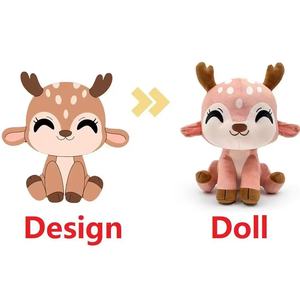
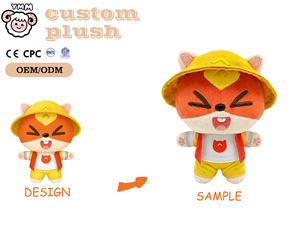
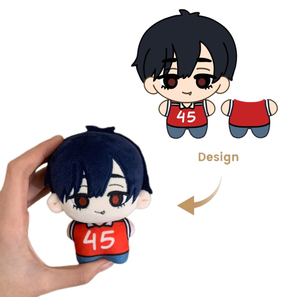
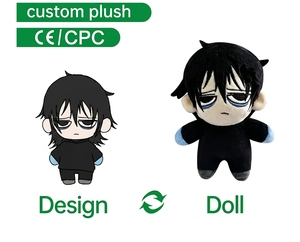
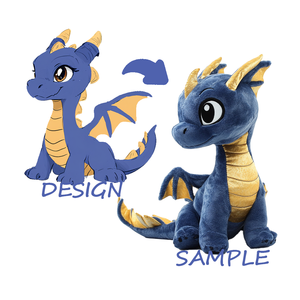
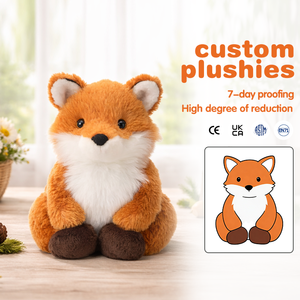
Dedicated design engineers translate client sketches, vector art, or reference photos into physical tech-packs, ensuring accurate fabric nap alignment, scale ratios, and embroidery stitch count density.
Custom Branding & Export Logistics
Full private-label customization including woven side labels, hangtags with custom barcodes/QR codes, FSC-certified eco packaging, master carton drop-test compliance, and worldwide DDP freight handling.
Weighted Plush Sourcing FAQ: Procurement & Compliance
What is the recommended weight ratio for therapeutic weighted plushies?
Standard retail products typically range from 1.5 lbs to 5.0 lbs (0.7kg to 2.3kg). For pediatric sensory applications, the general safety standard dictates that the toy's weight should not exceed 10% of the target user's total body weight.
How do factories ensure weighted beads do not leak or pose choking hazards?
Premium manufacturers enclose weight media inside a high-density, double-stitched 210T polyester or cotton canvas inner pouch. This inner lining is then secured within the outer plush casing via reinforced internal seams.
What safety certifications are required for exporting weighted plush to North America and Europe?
Key standards include ASTM F963 (USA), CPSIA (Lead and Phthalates), EN71 Parts 1, 2 & 3 (EU physical, flammability, and heavy metal migration), ISO 8124, and REACH chemical safety standards.
What are the standard Minimum Order Quantities (MOQ) for custom OEM production?
Standard OEM production MOQs range from 300 to 500 units per design for custom dyed fabrics or specific size developments. Existing stock fabric colors allow for smaller trial batches.
Are weighted plush toys machine washable?
Products engineered with removable inner weighted pouches or waterproof glass microbeads can be surface washed or machine washed on delicate cycles inside mesh laundry bags. Always specify washable materials during tech-pack creation.
What is the average timeline from initial inquiry to final export delivery?
Sampling and pattern approval takes 7–14 days. Mass production requires approximately 45–60 days, followed by sea freight (20–35 days) or air freight (5–7 days) depending on global destination ports.
Partner with a Trusted OEM Plush Toy Manufacturer
Looking for a vertically integrated manufacturing partner for your weighted plush series, custom promotional stuffed toys, or private-label retail lines? Contact our export engineering team today for technical catalogs and factory quotes.
Get Catalog