
Featured OEM/ODM Production Models & Industrial Machinery
Verified B2B Manufacturing Solutions, Precision Filling Automation & Custom Plushie Engineering
Executive Overview: China’s Role in Modern High-Precision Plush Manufacturing
The global plush toy and stuffed animal industry has undergone a radical structural transformation. Procurement managers, enterprise IP holders, corporate merchandisers, and international toy brands are no longer seeking simple low-cost manual assembly. Today’s market demands micro-level quality control, eco-certified raw material traceability, advanced computer-aided pattern digitization, and automated fiber-stuffing precision. As China remains the premier manufacturing nexus for global soft goods, top tier producers have evolved into fully integrated industrial ecosystems.
This whitepaper serves as an exhaustive procurement guide and technical benchmark for B2B buyers seeking elite plush manufacturing services, specialized filling machinery, and end-to-end OEM/ODM contract production. By combining specialized 2D-to-3D pattern development, high-speed automated polyester filling systems, multi-head embroidery technology, and strict compliance with international safety standards (EN71, ASTM F963, ISO 8124, GOTS), leading Chinese exporters provide unparalleled supply chain resilience and product excellence.
Core Procurement Takeaway: Modern sourcing strategies prioritize vertically integrated facilities where fabric cutting, embroidery digitizing, mechanical stuffing, seam tension verification, metal detection, and custom packaging are performed under unified ISO 9001 governance.
Enterprise Advantages: Vertically Integrated Plush Production Infrastructure
The competitive edge of leading Chinese plush exporters lies in full-spectrum vertical integration. Unlike regional contract stitching workshops that outsource critical components, top-tier production centers execute every phase of manufacturing within centralized, clean-room compliant facilities.
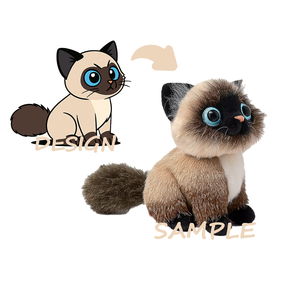
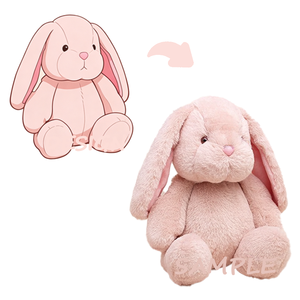
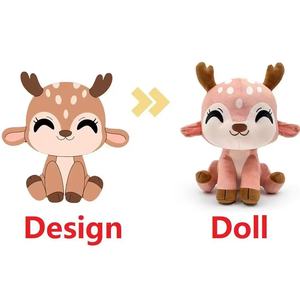
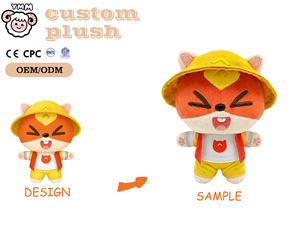
1. 2D Sketch to 3D Plush Engineering
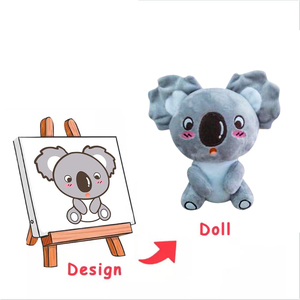
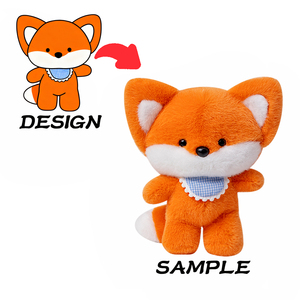
Transforming conceptual vector graphics, anime drawings, or brand mascots into physical plush units requires expert pattern-making engineers. Utilizing CAD software, master patternmakers convert flat artwork into precise multi-panel fabric templates, adjusting for pile height, fabric elasticity, and seam allowances.
2. Automated Laser & Die Cutting
To prevent frayed pile edges and ensure millimeter-accurate panel shapes, production centers deploy high-speed multi-layer laser cutting systems and automated hydraulic die cutters. This process maximizes fabric yield, reduces material waste, and guarantees absolute dimensional consistency across high-volume production runs.
3. High-Density Embroidery & Printing
Facial features, corporate logos, and complex decorative motifs are executed using multi-head computerized embroidery machinery capable of handling 12+ thread colors simultaneously with extreme stitch density. For gradient graphics, eco-friendly heat-transfer and sublimation printing are seamless integrated.
4. Dual-Nozzle Mechanical Fiber Filling
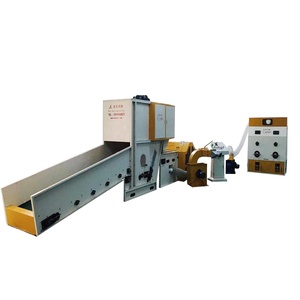
Achieving the ideal tactile softness and resilient bounce back requires precision stuffing technology. Modern plants utilize dual-nozzle pneumatic fiber opening and filling machines. These systems loosen clumped polyester fibers and inject them evenly into plush shells without creating air pockets or uneven density.
5. Seam Strength & Safety Testing
To prevent choking hazards and fabric tearing during commercial use, all plush items undergo mechanical pull tests. Seams must withstand continuous tension forces exceeding 70 Newtons according to EN71 and ASTM regulations. Safety eyes and nose attachments are mechanically locked with internal safety washers.
6. Multi-Stage Metal & Needle Detection
Safety is paramount in toy exports. Every finished product passes through conveyorized dual-head electromagnetic metal detectors capable of detecting broken needle fragments down to 0.8mm ferrous spheres. Packed cartons are sealed only after receiving final quality clearance stickers.
The Standardized OEM/ODM Contract Manufacturing Workflow
To eliminate operational bottlenecks and protect buyer IP, established Chinese manufacturers operate under strict stage-gate project management workflows:
Evaluating 2D artwork, target dimensions, material specs, and price thresholds.
Creating initial structural proportions and physical fabric paper patterns.
Stitching first physical sample with exact fabrics, embroidery, and stuffing.
Submitting samples to third-party labs (SGS/TÜV/Intertek) for CE/ASTM certs.
Executing mass cutting, sewing, stuffing, QC inspection, and export packing.
Future Procurement Trends in the Global Plush Toy Market (2025–2030)
As consumer preferences, regulatory frameworks, and ESG (Environmental, Social, and Governance) mandates evolve, corporate buyers must align their procurement strategies with several critical structural shifts within the plush manufacturing sector:
1. Transition to Circular & Recycled Synthetics (GRS Certified rPET)
Traditional virgin polyester fill and acrylic faux furs are rapidly being phased out in favor of Global Recycled Standard (GRS) certified rPET. Produced by processing post-consumer plastic water bottles into ultra-fine polyester staple fibers (1.5D to 7D fineness), rPET delivers identical hand-feel, flame retardancy, and loft recovery while reducing carbon footprint by up to 45%. Sourcing partners who maintain certified GRS chain-of-custody documentation offer a clear advantage to brands aiming for zero-landfill goals.
2. Bio-Based & Organic Surface Textiles
Beyond recycled synthetics, premium plush lines—particularly infant toys and eco-luxury collectibles—are adopting GOTS-certified organic cotton velour, bamboo viscose, and biodegradable PLA (Polylactic Acid) plant-based fibers. Chinese textile mills have pioneered bio-dyeing processes that eliminate heavy metal fixatives, azo dyes, and formaldehyde, complying with the stringent Oeko-Tex Standard 100 Class 1 (safe for babies).
3. AI-Assisted Prototyping & Generative Plush Engineering
The traditional 3-week physical sampling cycle is being compressed into 48-hour digital workflows. By feeding 2D character designs into 3D plush simulation engines, software algorithms generate accurate volumetric stress maps, seam placement suggestions, and fabric consumption estimates. This allows buyers to approve 3D digital twins before cutting a single yard of fabric, significantly reducing sample iteration costs.
4. Smart Plushies & Sensory-Integrated Comfort Products
The boundary between classic plush toys and consumer wellness electronics is blurring. Sourcing trends highlight explosive demand for weighted plush items (incorporating non-toxic glass microbeads for anxiety relief), internal haptic heartbeat modules, voice-activated Bluetooth speakers, and ceramic heating inserts. Top-tier manufacturers now feature ESD-safe (Electrostatic Discharge) assembly zones specifically designed for integrated electronic plush products.
Industry Development: Technological Upgrades in Plush Toy Machinery
The plush toy manufacturing landscape is experiencing a technological renaissance driven by industrial automation. B2B importers benefit directly from these factory-floor innovations through reduced unit costs, tighter quality tolerances, and faster lead times.
Advanced Dual-Nozzle Stuffing Systems
Modern 220V/380V CE-certified filling machines represent a quantum leap over legacy single-tube blowers. Equipped with dual pneumatic nozzles, integrated fiber carding rollers, and digital weight sensors, these units allow two operators to fill complex plush shells simultaneously with pinpoint gram-weight accuracy. This prevents over-stuffing (which distorts facial proportions) and under-stuffing (which causes sagging).
- Integrated fiber carding eliminates lumps
- Digital pneumatic pressure regulation
- Energy-efficient 220V/380V workshop integration
Ultrasonic Seam Bonding & Edge Sealing
For synthetic short-pile fabrics like crystal super-soft velour, ultrasonic welding is replacing conventional mechanical needle thread in high-stress interior seams. Ultrasonic energy fuses synthetic fibers at a molecular level, creating virtually indestructible bonds that eliminate seam slippage and fiber shedding without adding hard chemical adhesives.
- Zero thread breakage or seam opening
- Clean edge cauterization prevents fur shedding
- Ideal for stress-point reinforcement
Comprehensive Plush Procurement FAQ (B2B Sourcing Guide)
Essential answers to complex regulatory, operational, and technical questions encountered by global buyers during custom plush production programs.
For North America, plush toys must strictly comply with ASTM F963-17 (Standard Consumer Safety Specification for Toy Safety), covering physical/mechanical hazard tests, flammability, and total lead/heavy metal content limits regulated by the CPSC and CPSIA. For European Union markets, compliance with EN71 Parts 1 (Mechanical/Physical), 2 (Flammability), and 3 (Migration of Certain Elements) is mandatory, along with CE marking registration and REACH SVHC compliance. Established Chinese manufacturers maintain pre-tested, certified raw material inventories and provide batch-level certificates of analysis (COA).
MOQ is primarily dictated by fabric mill minimum dyeing runs rather than assembly labor constraints. Standard custom dyed fabric runs generally require a minimum of 500 to 1,000 meters of textile. For standard 20cm to 30cm plushies, this translates to a typical MOQ of 500 to 1,000 units per style. However, for specialized low-MOQ programs (300 units), manufacturers utilize stock-color fabrics combined with custom sublimation printing or custom embroidery accents to meet buyer requirements without incurring high fabric surcharge fees.
A standard end-to-end production timeline spans 45 to 65 calendar days:
1. Prototyping & Patterning: 7–12 days for initial sample creation.
2. Sample Approval & Revisions: 5–7 days (depending on client feedback cycles).
3. Material Sourcing & Laboratory Testing: 15 days.
4. Mass Production (Cutting, Sewing, Stuffing, QC): 20–30 days.
5. Final Inspection & Container Loading: 3–5 days.
Reputable production facilities sign legally binding Non-Disclosure Agreements (NDAs) prior to receiving tech-packs. Furthermore, internal CAD pattern files are stored on secure air-gapped servers, access to embroidery digitizing files is restricted to authorized technicians, and factory policies strictly forbid the display or unauthorized sale of client overruns in domestic B2B trade channels. Certified export facilities welcome third-party IP compliance audits (such as SMETA or ICTI CARE audits).
3D/7D Hollow Conjugate Siliconized PP Cotton features spiraled hollow fibers that provide high resilience, structural bounce-back, and excellent washability—making it the ideal choice for general plushies and play toys. Feather-Touch Microfiber (0.8D to 1.2D) consists of ultra-fine solid filaments that simulate down feathers, creating an exceptionally soft, squishy, "marshmallow-like" texture popular in stress-relief plush toys, weighted body pillows, and high-end collectible plushies.
Yes. Specialized industrial stuffing systems can be calibrated for multi-stage insertion. Squeakers, movement sensors, and recordable IC sound modules are enclosed in protective poly-fill pouches before insertion to prevent internal shifting. Weighted non-toxic PE/glass beads are pre-sealed in double-stitched inner mesh bags before placement within the plush body cavity to meet international seam integrity safety guidelines.
B2B Vendor Evaluation & Technical Audit Checklist
When selecting a contract plush manufacturer in China, procurement teams should evaluate potential partners against five core operational criteria:
Ensure the facility holds active ISO 9001 quality management certification, along with social compliance credentials such as SMETA (Sedex Members Ethical Trade Audit), ICTI Ethical Toy Program, or BSCI audit reports.
Verify that the factory owns multi-head embroidery machines, dual-nozzle pneumatic stuffing systems, automated pattern cutters, and dual-head conveyor metal detectors to avoid subcontracting delays.
Demand Transaction Certificates (TC) for recycled polyester (GRS) and verify that all dyes, plastic eyes, and thread conform to OEKO-TEX Standard 100 chemical safety thresholds.
Partner with manufacturers offering dedicated English-speaking engineering teams capable of translating 2D concepts into compliant, production-ready plush tech-packs within 7 to 10 working days.
Ready to Scale Your Plush Manufacturing Program?
Connect directly with our senior engineering team for technical consultation, instant OEM/ODM price quotes, custom pattern digitizing, or specialized filling machinery inquiries.
Contact Us